Ayahuasca vs Bufo – similarities and differences on the healing journey

Ayahuasca and Bufo (5-MeO-DMT) are two powerful—but very different—sacred medicines. Ayahuasca, the master teacher of the Amazon, unfolds over 6–8 hours, guiding you through visions, emotional release, and deep reflection—always with the intensity you’re ready for. Bufo, the cosmic catapult from the Sonoran Desert toad, is a much shorter journey—just 15–45 minutes—but often far more intense, dissolving the ego and launching you into pure unity consciousness. Understanding these differences in duration, effect, and tradition will help you see which medicine best aligns with your healing path and intentions. Key takeaways: Ayahuasca is the master teacher — guiding you through a 6–8 hour journey, showing you exactly what you need to experience, in the intensity you’re ready for. Bufo is the rapid reset — a short but powerful 20–40 minute journey that often brings complete ego dissolution and a profound sense of unity. The right medicine depends on you — your intention, readiness, and healing path matter more than intensity. Both require respect, preparation, and skilled facilitators. Table of Contents FAQ – Ayahuasca vs Bufo What is the main difference between Bufo and Ayahuasca? The main difference is in intensity and duration. Ayahuasca is a plant brew that unfolds gradually over 6–8 hours, often with visions, emotional release, and deep self-reflection. Bufo (5-MeO-DMT) is the secretion of the Sonoran Desert Toad, and its effects are much faster and more intense—peaking within minutes and often leading to ego dissolution or a feeling of merging with everything. While Ayahuasca guides you through a process, Bufo is more like an instantaneous immersion into non-duality. Which lasts longer: a Bufo or an Ayahuasca ceremony? Ayahuasca ceremonies usually last 6–8 hours, with waves of visions, emotions, and insights. Bufo ceremonies are much shorter, often 20–40 minutes, but the experience can feel timeless due to its intensity. Why is ancestral lineage important in choosing plant medicine? Ancestral lineage connects a medicine to generations of wisdom, ritual, and safety practices. Ayahuasca’s continuous lineage offers seekers grounding in ancient traditions, while Bufo lacks this depth of cultural continuity. For many, this adds meaning, safety, and trust to the ceremony. Is Bufo stronger or more intense than Ayahuasca? Many people describe Bufo (5-MeO-DMT) as the most intense psychedelic, often resulting in ego dissolution. Ayahuasca can also be powerful, but it tends to unfold gradually, allowing for gradual reflection and integration during and after the ceremony. Can Bufo or Ayahuasca be dangerous without proper guidance in 2025? Yes. Both should only be experienced under the care of trained, experienced facilitators. Physical, emotional, and psychological risks increase without proper preparation, safe settings, and integration support. How do integration practices differ after Bufo vs Ayahuasca? Integration after Bufo often focuses on grounding and processing sudden, intense insights. Ayahuasca integration can involve weaving complex visions and lessons into daily life. Both require reflection, community, and support for lasting transformation. Why do many seekers travel to Colombia for Ayahuasca retreats? Colombia offers authentic ceremonies led by experienced facilitators within the medicine’s cultural roots. Seekers value the combination of tradition, safe retreat settings, and natural beauty, which together create an ideal environment for healing. Which is better for healing: Bufo or Ayahuasca? Neither is “better.” Ayahuasca is often used for gradual emotional and physical healing, while Bufo is more about ego dissolution and spiritual awakening. Can you combine Bufo and Ayahuasca? Some retreat centers work with both, but there are safety risks due to how long harmala alkaloids from Ayahuasca remain active in the body. Experts recommend waiting at least 24 hours between them (ICEERS). At Harmonica Retreat, we advise against combining these two potent medicines, as each is powerful in its own right and deserves its own space for integration. The main difference is in intensity and duration. Ayahuasca is a plant brew that unfolds gradually over 6–8 hours, often with visions, emotional release, and deep self-reflection. Bufo (5-MeO-DMT) is the secretion of the Sonoran Desert Toad, and its effects are much faster and more intense—peaking within minutes and often leading to ego dissolution or a feeling of merging with everything. While Ayahuasca guides you through a process, Bufo is more like an instantaneous immersion into non-duality. Ayahuasca ceremonies usually last 6–8 hours, with waves of visions, emotions, and insights. Bufo ceremonies are much shorter, often 20–40 minutes, but the experience can feel timeless due to its intensity. Ancestral lineage connects a medicine to generations of wisdom, ritual, and safety practices. Ayahuasca’s continuous lineage offers seekers grounding in ancient traditions, while Bufo lacks this depth of cultural continuity. For many, this adds meaning, safety, and trust to the ceremony. Many people describe Bufo (5-MeO-DMT) as the most intense psychedelic, often resulting in ego dissolution. Ayahuasca can also be powerful, but it tends to unfold gradually, allowing for gradual reflection and integration during and after the ceremony. Yes. Both should only be experienced under the care of trained, experienced facilitators. Physical, emotional, and psychological risks increase without proper preparation, safe settings, and integration support. Integration after Bufo often focuses on grounding and processing sudden, intense insights. Ayahuasca integration can involve weaving complex visions and lessons into daily life. Both require reflection, community, and support for lasting transformation. Colombia offers authentic ceremonies led by experienced facilitators within the medicine’s cultural roots. Seekers value the combination of tradition, safe retreat settings, and natural beauty, which together create an ideal environment for healing. Neither is “better.” Ayahuasca is often used for gradual emotional and physical healing, while Bufo is more about ego dissolution and spiritual awakening. Some retreat centers work with both, but there are safety risks due to how long harmala alkaloids from Ayahuasca remain active in the body. Experts recommend waiting at least 24 hours between them (ICEERS). At Harmonica Retreat, we advise against combining these two potent medicines, as each is powerful in its own right and deserves its own space for integration. https://www.youtube.com/watch?v=Wl3aKOkc4z4 Important Disclaimer Every ceremony is unique. Ayahuasca and Bufo (5-MeO-DMT) ceremonies vary significantly across different traditions and practitioners. This guide offers
Ayahuasca vs Peyote
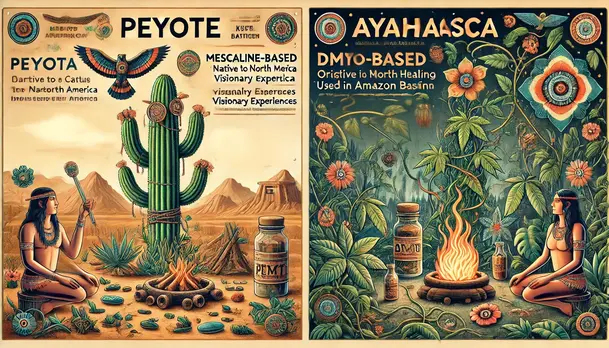
We look at the differences and similarities between Peyote and Ayahuasca. Whether you’re looking to understand these two medicines or trying to determine which one might be the right fit for you, this blog will offer valuable insights to guide you. Key takeaways Ayahuasca originates from the Amazon and is a brew made up of two plants from the jungle, while Peyote, from Mexico and the southern US, is a single cactus plant. Both plants plants are seen as wise elders, having existed long before us, carrying many teachings. Ayahuasca is generally thought of as the Grandmother spirit, and Peyote as Grandfather. Peyote’s slow growth and scarcity make it a precious resource, requiring a genuine calling for use. Ayahuasca is more abundant but also needs to be harvested sustainably. Table of Contents “This upright posture is said to be symbolic, likened to galloping on horseback across the landscapes of Mexico” Disclaimer It’s important to recognize that different traditions have their own unique ways of conducting Ayahuasca and Peyote ceremonies. This blog is a general overview, but your experience can vary a lot depending on who is facilitating the ceremony. To add, these are general guidelines and frameworks for how Ayahuasca and Peyote ceremonies are typically conducted. Your own personal, subjective experience may be distinctly different. The truth is that nothing can fully prepare you for your own Ayahuasca or Peyote ceremony. It’s essential to have open conversations with the facilitators of the ceremony, ask any questions you might have, and ultimately make your own decision about which plant medicine is right for you. Ayahuasca vs Peyote: Origins Ayahuasca has its roots deep in the Amazon rainforest, where it has been used for centuries by indigenous tribes for spiritual and healing purposes. The medicine is a combination of two different plants: the Banisteriopsis caapi vine and the leaves of the Psychotria viridis shrub. Peyote is a small, spineless cactus native to the deserts of Mexico and the southern parts of the United States. This cactus has been used for thousands of years by Native American tribes. Unlike Ayahuasca, which is a combination of two plants, Peyote is a single plant that contains the psychoactive compound mescaline. Ayahuasca vs Peyote: Main Ingredients DMT vs. Mescaline The primary ingredient responsible for the psychedelic effects in Peyote is Mescaline, while in Ayahuasca, it is DMT (Dimethyltryptamine). Beyond these main compounds, Peyote contains over 60 different alkaloids, and Ayahuasca has more than 10, contributing to their complex effects on consciousness. However, for indigenous cultures, the focus is less on these specific psychedelic molecules. They believe that these plants embody a spirit – a plant teacher that connects with you on a deeper level. When you consume these plant medicines, the spirit of the plant enters your consciousness and begins to work within you, guiding your healing and personal growth. The experience is seen as a spiritual journey facilitated by the plant’s spirit, rather than just a chemical reaction. Ayahuasca vs Peyote: Similarities Both Peyote and Ayahuasca are powerful plant medicines that allow you to delve deep into your subconscious. They help you gain a clearer understanding of what is happening in your life – what you’re doing well, what you might be doing wrong, and areas that need correction. These medicines can bring suppressed emotions to the surface, providing a reality check on your life and enabling you to process past emotional impacts that still affect you today. They can offer a vision for how you want to live your life moving forward. Both Ayahuasca and Peyote are incredibly powerful tools found in nature for self-discovery, healing, and personal transformation. https://www.youtube.com/watch?v=RVfA6sR7OMI Master Teachers: The Grandfather and Grandmother Spirits Both Peyote and Ayahuasca are considered sacred medicines by the indigenous tribes that share them. It’s crucial to approach these plant teachers with deep respect, humility, and intention for healing and growth. These medicines are not just substances to “try” for the sake of seeing colors or having an experience; they are powerful spiritual guides that require a serious and respectful approach. Among many traditions, Peyote is often referred to as the “Grandfather” spirit, while Ayahuasca is known as the “Grandmother” spirit. These plants are seen as wise elders, having existed long before us, and carrying profound teachings. Engaging with them in a ceremonial context is essential to truly connect with their wisdom and guidance. In the traditions of Colombia, Ayahuasca is also known as Yagé and is revered similarly, embodying both the Grandfather and Grandmother spirits. The importance of connecting with these plants in a ceremonial setting can’t be overstated. They offer much more than just a psychedelic experience – they are here to teach us, to help us heal, and to guide us on our spiritual journeys. Must read blog: What is Yagé? Peyote Ceremony: What to Expect One of the big differences between Peyote and Ayahuasca ceremonies is the level of structure and discipline often found in Peyote ceremonies. From the way I know Peyote ceremonies to be, they tend to be quite strict. Participants are typically required to sit upright for the entire ceremony, which can last up to 12 hours, often without the support of a backrest. This upright posture is said to be symbolic, likened to galloping on horseback across the landscapes of Mexico, embodying a strong and resolute stance. Maintaining this posture for an extended period can be tough physically. Also, there are specific protocols for entering or leaving the circle during the ceremony, such as when one needs to go to the bathroom. While many people describe Peyote as not being as intense as Ayahuasca, this largely depends on the dosage of Peyote consumed. The effects can vary significantly based on how much Peyote is taken, and in some cases, the experience can be just as profound and transformative as Ayahuasca. Prayer in the Peyote Ceremony Much like in San Pedro ceremonies, Peyote ceremonies are often guided by prayers and teachings shared by the medicine giver. These prayers
What is Rapéh (Hapey)?
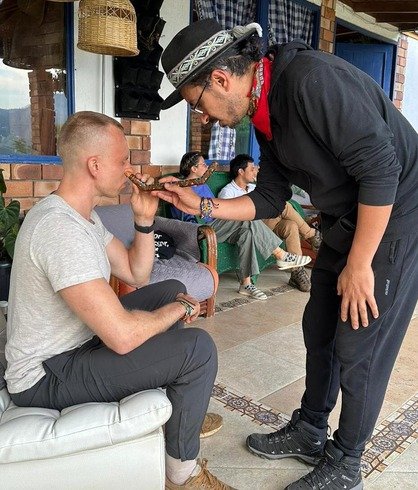
Have you ever heard of rapéh? This traditional medicine, used by indigenous tribes in the Amazon, comes as a powder made from a blend of various trees and plants. Often mixed with tobacco for its cleansing and healing properties, rapéh, also known as hapey, rapeh, rapé, or hapé, holds a strong place in Amazonian culture. Join us as we explore what it is and uncover its many benefits. Key takeaways Rapéh, also known as Hapey, is a traditional medicine used by indigenous tribes in the Amazon. It is a powder made from various trees and plants, applied through the nostrils using a special pipe. Like many of these plant medicines, it gets worse before it gets better. Immediate effects of the rapéh may be uncomfortable but in the longer term you can feel many benefits – mental, spiritual and physical. Rapéh is often used before an Ayahuasca ceremony as it can help participants calm their nerves and ground themselves. It also brings a level of clarity around their intention, setting a focused mindset. Table of Contents “Rapéh is incredibly beneficial for breaking free from thought loops, offering mental clarity and a sense of being grounded.” How is Rapéh applied? Rapéh is typically blown into the nostrils using a special pipe, facilitating deep cleansing and centering experiences. It can either be administered by another person or self-applied using an auto applicator. It is important to first take a moment to set an intention with the rapéh. Focus on what you want to achieve, whether it’s mental clarity, emotional healing, grounding, or connecting with your inner self. This can greatly enhance the effectiveness of the medicine. Before the Rapéh is applied, it’s important to hold your breath. Some traditions suggest exhaling first and then holding your breath, while others recommend inhaling and then holding your breath. Once applied, you will feel an uncomfortable sensation in the nostril and forehead area. This sensation often travels from your forehead to your head, followed by a sensation throughout your body. The intensity of these sensations depends on the quantity of Rapéh used and the strength of the blow during application. Rapéh can cause various physical reactions such as shivering, hot or cold sensations, sweating, and in some cases, nausea and vomiting. It can also create a sense of light-headedness or dizziness. After the Rapéh is applied, it’s crucial to breathe only through your mouth and avoid breathing through your nose. After about five minutes, you can blow and clean your nose. There will likely be a significant amount of discharge, which is considered a way of expelling negative energies and impurities from your body and spirit. Must read blog: What to expect in your Ayahuasca ceremony https://youtu.be/8TlGs8I2zGY?si=PYGY44t8Ejor9NYk Spiritual benefits of Rapéh Breaking Free from Repetitive Thoughts Have you ever felt trapped in endless loops of repetitive thinking? Rapéh is incredibly beneficial for breaking free from these thought loops, offering mental clarity and a sense of being grounded. Enhancing Your Meditation When you incorporate Rapéh into your meditation practice, you connect with the energy and spirit of that particular blend of plants. This connection can silence compulsive thoughts and help you tune in to your inner self, allowing messages of clarity and peace to come through. These messages manifest in various ways. For example, you might experience physical sensations such as back pain. It’s not that the Rapéh is causing the pain, but rather that it’s helping you connect with your body and become aware of pain or issues that you might have been ignoring. Overcoming Emotional and Spiritual Blockages Rapéh is also effective in breaking through emotional and spiritual blockages. Sometimes, there are things we struggle to push through or let go of on our own. The plant medicine in Rapéh can assist in this process, helping us release and move past these obstacles. Processing the Past Rapéh can bring up memories from the past, prompting emotional release and processing. This can be a powerful tool for healing, as it helps you confront and integrate past experiences, leading to emotional balance and well-being. Physical conditions that Rapéh can alleviate Relieving Headaches Rapéh can work wonders for headaches. While it might initially intensify the pain, this is part of its healing process. By pushing through the discomfort, rapéh ultimately brings relief and clarity. Clearing Nasal Congestion If you struggle with nasal congestion, runny nose, and sneezing, Rapéh’s cleansing properties can help with this. It clears the nasal passages, alleviating symptoms and making breathing much easier. Boosting Energy Rapéh provides an energy lift by removing stagnant energy and making you feel more awake and alert. Its effects can boost both the mind and body, helping you feel more energized and focused. “Specific types of Rapéh, like Parika, can be particularly helpful if someone is struggling to connect with Ayahuasca.” How Does Rapéh Relate to Ayahuasca? Rapéh is a related medicine to Ayahuasca, often used in conjunction with Ayahuasca ceremonies. While not every Ayahuasca shaman incorporates Rapéh into their practice, it is commonly seen in many ceremonies. Rapéh before a ceremony Rapéh is frequently used before the ceremony to help participants calm their nerves and ground themselves. This grounding effect helps prepare individuals energetically for the Ayahuasca experience. Applying Rapéh before the ceremony can also bring a level of clarity around the participant’s intention, setting a focused mindset for the journey ahead. Must read blog: Ayahuasca Intention In some instances, participants may vomit after using Rapéh, which is considered beneficial. This purging process indicates that Rapéh is already beginning to cleanse the body and energetically prepare the individual before they even consume Ayahuasca. Rapéh during a ceremony During the ceremony, Rapéh can be used to address specific needs. It can help break through blockages, assisting participants who may feel stuck or unable to connect deeply with the Ayahuasca. Specific types of Rapéh, like Parika, are known for their heart-opening properties, which can be particularly helpful if someone is struggling to connect with the medicine. Additionally, Rapéh can aid
Ayahuasca vs DMT

There are many different plant medicines and substances that can put us in an altered state of consciousness. Understandably, we are curious about how these substances affect us, their benefits, and what we can expect from them. Should we try them? Which one fits us better? In this blog, we dive into the comparison between Ayahuasca and DMT. Key takeaways: Both Ayahuasca and DMT contain the psychedelic compound DMT. However, Ayahuasca includes MAO inhibitors that make the DMT orally active and prolong the experience, whereas DMT is usually smoked for a shorter, intense trip. Indigenous communities see Ayahuasca as a sacred plant medicine facilitating a connection with the spirit world, beyond mere chemical reactions. They emphasize the spiritual and holistic aspects of the Ayahuasca experience over the scientific focus on DMT. While both Ayahuasca and DMT have potential therapeutic benefits, Ayahuasca is known for its comprehensive healing process, including physical, emotional, and spiritual cleansing. Smoking DMT can offer quick insights. Table of Contents Disclaimer We are all individuals with different backgrounds, past experiences, levels of intention, and maturity, among many other factors. While the mind often likes to compare and judge, it’s important to remember that each plant medicine offers its own unique angle of healing. What is shared in this blog (and in other blogs comparing different plant medicines) are general guidelines. These are not universal truths and may be perceived differently by each individual. I just want to highlight that these are just guidelines. Ultimately, nothing can substitute for your own personal experience with a specific plant medicine. Active Ingredient: DMT Ayahuasca and DMT share the same major active ingredient: Dimethyltryptamine, commonly known as DMT. This powerful compound is often referred to as the “spirit molecule” in documentaries and literature due to its profound effects on consciousness. DMT is known for inducing intense, often spiritual experiences, where individuals report seeing divine beings, connecting with higher consciousness, or experiencing alternate dimensions. This unique ability to facilitate such deep and transformative experiences naturally sparks interest in those curious about exploring altered states of consciousness. In Ayahuasca, DMT is derived from specific plants, typically combined with a MAO inhibitor to make it orally active and prolong the experience. In its pure form, DMT is usually smoked or vaporized, leading to a much shorter, but equally intense journey. The Indigenous Viewpoint on Ayahuasca vs DMT When discussing Ayahuasca with indigenous communities, they often express discomfort with the idea that DMT alone is responsible for all the effects of Ayahuasca. For them, this perspective represents a form of scientific rationalisation and simplification of the plant, just as a way to explain it using the logical mind. However, these profound experiences are not meant for the logical mind to dissect; they are for the spirit to receive and begin transforming our inner being. Indigenous masters have historically achieved remarkable feats with Ayahuasca, viewing it not just as a chemical interaction but as a sacred guide. A recent example that highlights this made international headlines: when a plane crashed in the Amazon, an indigenous elder master drank Ayahuasca to aid in finding the crash site. Remarkably, he was able to locate the wreckage and save the surviving children, where the radar technology wasn’t working. This story emphasizes the indigenous’ ability to connect with the spirit of the jungle and other plants, reinforcing their belief that Ayahuasca facilitates a connection with the spirit world, guiding and healing them in ways beyond mere chemical reactions. For indigenous people, Ayahuasca is far more than a substance that induces “hallucinations”; it is a spiritual tool that helps them navigate and understand their world. This holistic approach contrasts with the Western tendency to reduce the experience to its biochemical components. You can find out more about the indigenous perspective on the blog: What is Taita? To add – there are more than 13 different alkaloids in Ayahuasca, suggesting a complexity far greater than the DMT reaction alone. Must read blog: How does Ayahuasca affect the brain? Find out if Ayahuasca is right for you Will you be safe physically and emotionally? How will you be supported in the ceremony? How do the facilitators handle difficult situations? How will you be able to process the experience? You want change, but will your life be unrecognizable after Ayahuasca? + 13 things to consider before drinking Ayahuasca? Smoking DMT In my early 20s, I personally smoked DMT a few times. To be honest, nothing too spectacular happened. I saw some colors, but I never really “broke through.” I tried it in introspective settings as well as casually on a friend’s couch while hanging out. Looking back, I’m glad I didn’t break through because I don’t think I was truly ready for that experience. Many people who smoke DMT can be considered “psychonauts” – individuals keen on exploring their consciousness. While there is often an introspective element, there’s usually a significant overlap with the recreational use of psychedelics. I’ve had participants at retreats who were somewhat regular users of DMT. Initially, they reported similarities between Ayahuasca and DMT. One person even expressed disappointment, saying he expected more from Ayahuasca and felt he could have had similar experiences without traveling thousands of miles. However, in the following Ayahuasca ceremony, the intensity increased significantly, giving him an experience unlike anything he had encountered before. This has happened with multiple people who have tried both DMT and Ayahuasca. This shift often occurs when there is a lack of respect for Ayahuasca. Either nothing significant happens, or the Ayahuasca experience becomes very intense, emphasizing its non-recreational nature and perhaps highlighting the underlying reasons for seeking substance-induced experiences in the first place. Ayahuasca vs DMT: Chemically Extracting the Experience From my limited perspective, smoking DMT feels like a bit of a shortcut. It’s comparable to the difference between LSD and magic mushrooms. Both have similar active components, but those who have tried both can sense the difference – the “spirit” is often felt to be missing in
Ayahuasca vs magic Mushrooms – healing through laughter or through crying?
This blog explores the nuances and commonalities of these two powerful ancestral medicines, Ayahuasca vs mushrooms, guiding you to better understand which might resonate more with your current stage of personal and spiritual development. Introduction: Ayahuasca, a traditional Amazonian plant medicine, or magic mushrooms, have their own rich history of use in various cultures. Both offer pathways to profound insights and transformations. Through this exploration, we’ll compare their effects, the context of their use, and the experiences they facilitate, providing you with a clearer picture of what each might bring to your journey of self-discovery and healing. Key takeaways: Both magic mushrooms and Ayahuasca can create breakthrough experiences, understandings about our lives and be a profound catalyst for change in a person. It is important to do these medicines in a “set and setting” where one feels safe and is well taken care of. Ayahuasca is always conducted in a ceremonial context with experienced shamans / Taitas / facilitators which is a great benefit The purging is a tremendously powerful element of an Ayahuasca ceremony, which allows us to energetically let go of things that no longer serve us. In some ways mushrooms can be used in a more open, experimental way. Table of Contents Disclaimer: Please note that Ayahuasca and magic mushroom ceremonies vary widely across different cultures and traditions. The information presented here is a broad perspective, but individual experiences can differ significantly based on the specific practices of the ceremony leaders and the setting. Furthermore, while we offer a general outline of how Ayahuasca and mushroom ceremonies are typically conducted, remember that your personal experience can vary greatly. There’s no definitive guide that can fully prepare you for the unique, subjective journey you will experience with either Ayahuasca or magic mushrooms. Therefore, it is crucial to communicate with your ceremony facilitators, ensuring they can address your questions and concerns. Ultimately, the choice of which path to follow should be a personal decision, made after careful consideration and in alignment with your own spiritual and healing goals. Similarities Exploring the similarities between magic mushrooms and Ayahuasca reveals how both of these powerful substances serve as potent tools for deep introspection and self-discovery. At their core, both facilitate a profound journey into the subconscious, acting as mirrors that reflect the innermost aspects of our psyche. When you engage with either magic mushrooms or Ayahuasca, you go on a journey that can illuminate various aspects of your life. These medicines can offer clarity on what you’re doing well and areas where you might be straying off your desired path. They provide opportunities to understand and correct personal missteps, helping to align your actions more closely with your true intentions and values. One of the most significant aspects of both experiences is the ability to access and feel suppressed emotions. This emotional unearthing can be intense, but it is often necessary for healing and growth. Both magic mushrooms and Ayahuasca can act as catalysts for confronting and processing unresolved issues and traumas that continue to influence your present life. Additionally, these psychedelics can provide a stark reality check, offering a clear-eyed view of your life as it is, unclouded by the habitual narratives we tell ourselves. This unvarnished truth can be challenging, but it is often a crucial step towards making meaningful changes. Both magic mushrooms and Ayahuasca also have the potential to impart visions or insights about the future, helping to shape a vision for the life you aspire to live. This forward-looking aspect can be incredibly empowering, providing direction and motivation for personal and spiritual development. Origins of Ayahuasca and Magic Mushrooms: The origins of Ayahuasca and magic mushrooms are as rich and diverse as the experiences they offer. Understanding where these medicines come from adds depth to our appreciation of their roles in various cultures and traditions. Ayahuasca, with its roots deeply linked to the Amazon rainforest, has been a cornerstone of spiritual and healing practices among indigenous tribes for centuries. It is revered for its profound healing properties. It plays a significant role in the cultural fabric of Amazonian tribes, being used in rituals and ceremonies for spiritual guidance, community bonding, and medicinal purposes. Magic mushrooms, on the other hand, boast a more global heritage. These fungi have been used in spiritual and healing contexts across many different cultures and regions. Perhaps the most well-known traditional use of magic mushrooms is in Mexico, particularly among indigenous groups like the Mazatec, Mixtec, Nahuatl, and Zapotec. These regions have a long history of using psilocybin mushrooms (the psychoactive compound found in magic mushrooms) in their religious rituals, healing practices, and ceremonies. The use of these mushrooms in such contexts is often guided by shamanic figures, who help navigate the spiritual journey and ensure the safety and wellbeing of participants. Both share a common thread of being deeply respected and carefully used within their respective cultural contexts, highlighting their importance as tools for spiritual exploration and healing. Must read Blog: Ayahuasca origin – how the indigenous discovered Ayahuasca Differences between Ayahuasca vs magic mushrooms One key difference between Ayahuasca and magic mushrooms lies in their accessibility and the contexts in which they are typically used. Accessibility: Magic mushrooms have the advantage of being relatively easy to cultivate at home, making them more accessible to a broader audience. This accessibility means that, with some effort and knowledge, individuals can grow their own mushrooms for personal use. It’s important to note, however, that the cultivation and possession of magic mushrooms are subject to varying legal restrictions across different regions. While we don’t encourage any illegal activity, the fact remains that obtaining mushrooms can be more straightforward compared to Ayahuasca. Ayahuasca, in contrast, is much harder to come by, especially in Western countries. Its preparation involves specific plants from the Amazon rainforest and a process that requires traditional knowledge and experience. This complexity, coupled with legal restrictions in many parts of the world, makes Ayahuasca less accessible than
