What is Yagé?
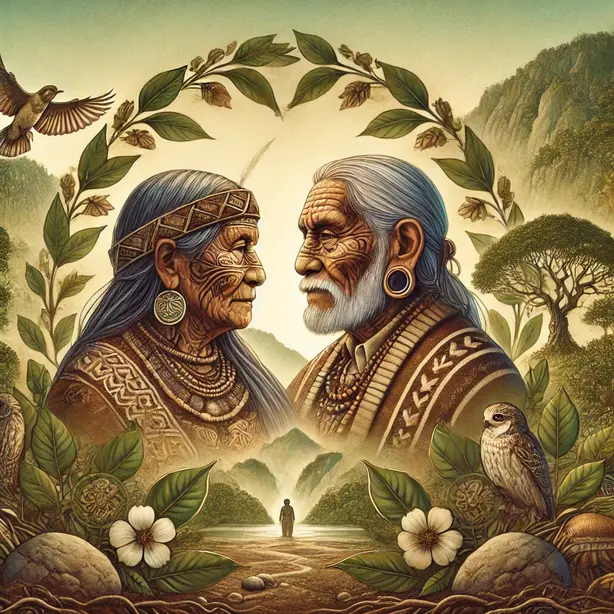
You might have come across the term “Yagé” multiple times while traveling through Colombia or researching Ayahuasca in this part of South America. Ayahuasca and Yagé can be used interchangeably, as they both refer to the same plant medicine. In this blog, we’ll break down what sets these two terms apart and explore their similarities and distinctions. Key takeaways There are many similarities and in some ways “Yagé” and “Ayahuasca” are interchangeable and are only a different word used for the same plant medicine. Ayahuasca is often connected to the nurturing and wise Grandmother Spirit, guiding users through introspection and healing, while Yagé is linked to the strong and grounding Grandfather Spirit. The indigenous often view Ayahuasca and Yagé as neutral spirits that present themselves in the way that the individual needs. Table of Contents “The indigenous often view Ayahuasca and Yagé as neutral spirits that present themselves in the way that the individual needs.” Feminine Ayahuasca vs. Masculine Yagé vs. Neutral Spirit In Spanish, words ending in “a” are typically feminine, like “casa” (house). Similarly, Ayahuasca is considered a feminine word, and many people refer to it as a (Grand-) Mother spirit or energy. On the other hand, words ending in “o” or “e” are masculine, with “Yagé” falling under this category. In Colombian tradition, Yagé is often referred to as “Abuelo Yagé” (Grandfather Yagé). However, it’s important to note that indigenous perspectives on Ayahuasca and Yagé can be more nuanced. Many indigenous communities view the spirit of these plants as neutral, allowing them to present themselves in the way that the individual needs. To some, the spirit may appear as a (Grand-) Mother, especially when there is significant healing needed in relation to the feminine. To others, the medicine might manifest as a more masculine energy, guiding them through discipline, rules, or personal growth. Personally, I’ve experienced a lot of lessons about masculinity through drinking Yagé, but I’ve also seen many participants in our ceremonies connect deeply with the Mother Ayahuasca. It’s important to emphasize that when you come to drink Yagé in Colombia, you won’t necessarily be limited to experiencing only a masculine energy. The medicine will present itself in the way that best serves your process, whether that involves the warmth of the Mother or the strength of the Grandfather. The spirit of the medicine knows what you need and will guide you accordingly. Find out if Ayahuasca is right for you Will you be safe physically and emotionally? How will you be supported in the ceremony? How do the facilitators handle difficult situations? How will you be able to process the experience? You want change, but will your life be unrecognizable after Ayahuasca? + 13 things to consider before drinking Ayahuasca? In the West, you often hear that you need to “surrender” to your Ayahuasca experience. This means allowing the medicine to guide you through the ceremony, not fighting it, but flowing with where it takes you. Interestingly, the vocabulary used by indigenous people is more about “aguantar,” which translates to “endure.” This term is often directed toward the facilitators, emphasizing the inner strength required to “withstand” Ayahuasca’s effects so that one can perform the necessary tasks during the ceremony without being overwhelmed. Another common term is “fortalecer,” meaning to fortify or strengthen, which carries a more masculine undertone. What is Yagé: Macho Culture in Colombia The idea of Ayahuasca or Yagé being considered masculine might also be influenced by the “macho” culture present in Colombia. While this isn’t something that’s openly discussed, it’s a cultural undercurrent that can shape perceptions. For example, not too long ago, women in indigenous tribes were legally obligated to give their income to their men, highlighting the presence of this “macho” culture in ways that might not be immediately apparent to someone from the West. https://youtu.be/a7olY01nAKc “The name Yagé is used in Colombia not because of a particular method of making the brew, but because it’s the term that’s culturally rooted in that region.” What is Yagé? Cultural vs Scientific Understandings of the Medicine When exploring the differences between Ayahuasca and Yagé, it’s common to find information online that points out the specific plants used in different regions. In Peru, the Ayahuasca brew is typically made with the Caapi vine (Banisteriopsis caapi), which contains MAO inhibitors. The DMT-containing plant is usually Psychotria viridis, known as chacruna. In Colombia, however, the DMT-containing plant is often identified as Diplopterys cabrerana, known as chaliponga, chagro, or chagropanga. However, it’s important to understand that these distinctions, while helpful, might not be as clear-cut as they seem. The indigenous way of working with these plants doesn’t necessarily align with the scientific or systematic approach we often take in the West. For indigenous communities, the emphasis is not on scientific names or consistency across regions. When I spoke with Mama Concha, a respected elder, she didn’t know the specific plant used in Peru and mentioned that scientific names aren’t a part of their tradition. In many indigenous cultures, knowledge is passed down orally, and the focus is on the spiritual connection with the plants rather than categorizing them in a scientific manner. This means that while different regions might refer to the plants by different names, they could still be talking about the same or similar plants. The nuances of how these plants are understood and named are deeply rooted in the cultural and spiritual practices of the people who use them, rather than in the consistency or classification we might expect from a scientific or Western perspective. Interestingly, when you talk to the indigenous about DMT and the idea that the effects of Ayahuasca are primarily due to the chemical absorption of this compound in the body, they would find this notion amusing. From their perspective, reducing the profound experiences of Ayahuasca to mere chemical reactions oversimplifies the deep spiritual connection they have with the plant. The Nuances of the Names: Ayahuasca vs Yagé When researching Ayahuasca and Yagé online, you
What is a Taita?

You might have heard the term “Taita” before in Colombia, in combination with Ayahuasca (Yagé) and you might be asking yourself, what does Taita mean? When does somebody become a Taita? This blog answers those questions, exploring the meaning of Taita, the responsibilities they have, and interesting legends that surround them. Key takeaways: Taitas are indigenous spiritual leaders and healers – considered as doctors in Amazonian cultures. They are responsible for guiding Ayahuasca ceremonies and preserving traditional knowledge and practices. The journey to becoming a Taita is long and rigorous, involving decades of training, personal sacrifice, and deep commitment to serve others and help them heal. Taitas are deeply connected to the spirit of Ayahuasca and the natural world. They emphasize the sacredness of Ayahuasca. Table of Contents Where does the word Shaman come from? Many Westerners refer to the person facilitating an Ayahuasca ceremony as an “Ayahuasca shaman.” However, the word “shaman” actually originates from Siberia, specifically from the Tungus-speaking peoples of Siberia. The term has been widely adopted in the West to describe indigenous healers and spiritual leaders from various cultures. In the context of Ayahuasca, the traditional “medicine givers” in Colombia and other regions do not typically consider themselves shamans, nor is it a word they are accustomed to using. However, with the growing interest from Westerners and the increasing global recognition of Ayahuasca practices, these healers are beginning to recognize the term “shaman” more frequently. Despite this, they retain their unique cultural identities and traditional titles, such as Taita, which hold significant cultural and spiritual meaning within their own communities. Must read blog: Ayahuasca Healing The Importance of Taitas from the Amazon The Amazon rainforest is a treasure trove of medicinal plants, yet only about 0.5% of its flora has been studied. Despite this small percentage, an impressive 25% of Western medications are derived from Amazonian plants. This highlights the untapped potential of the jungle’s healing powers. Traditionally, Taitas and Mamas (the female equivalent of Taitas) would drink Ayahuasca to connect with the Amazon and the spirits of the plants. In this extraordinary state of consciousness, they could access knowledge about different plants and how to use them for healing. This wisdom has been passed down through generations, making a Taita a traditional doctor of the Amazon, with Ayahuasca as their primary medicine. Powerful Taitas are known to cure diseases that many Western medicines struggle with, showcasing their profound healing abilities. However, Taitas humbly acknowledge that it is the “Great Spirit” doing the healing, with them merely facilitating the process. They call in the spirits, heal energetic misalignments, and cleanse the body with various remedies. Ultimately, the healing depends on the “Great Spirit” and the spirit of the person receiving the treatment. Who is a Taita? Several factors determine whether a person can be considered a Taita, and no single aspect is enough by itself. A Taita is a deep friend of Ayahuasca, involved in growing, cooking, and sharing his own Ayahuasca. This close relationship with the medicine is important. Beyond Ayahuasca, a Taita also possesses extensive knowledge of the Amazon’s flora and fauna, as well as other healing plants. Recognition by the elders of the community is necessary for someone to be considered a Taita. This recognition can occur in various ways. In the Inga tribe, for example, the elders sit with the aspiring Taita, and during their Ayahuasca visions, they must see the crown of Ayahuasca on the top of the person’s head. This vision is a significant sign of the individual’s readiness and connection to the medicine. In other tribes, the aspiring Taita is given specific tasks to heal various patients within a set period. If successful, they are rewarded with the title of Taita, marking their competence and dedication. Becoming a Taita is a great honor within indigenous traditions, reflecting a deep commitment to healing and spiritual guidance. “Taita” is not just a mark of skill but a recognition of one’s dedication to the community and the practices of Ayahuasca. It signifies a lifetime commitment to learning, healing, and serving others, and there is a profound respect and responsibility that comes with the role. For a musical perspective on the Ayahuasca crown, you can listen to a song by Nicolas Losado about the “corona de yagé” here. Find out if Ayahuasca is right for you Will you be safe physically and emotionally? How will you be supported in the ceremony? How do the facilitators handle difficult situations? How will you be able to process the experience? You want change, but will your life be unrecognizable after Ayahuasca? + 13 things to consider before drinking Ayahuasca? Responsibility of Taitas Taitas are individuals with a significant amount of “spiritual” power, and with this power comes great responsibility. They are tasked with guiding their community, helping the sick, and preserving the rainforest. Taitas are often the go-to figures in their communities for help and advice. Their role extends beyond the spiritual, stretching to social and environmental responsibilities as well. One prominent example is Taita Querubin, a major Taita who recently passed away at the age of 102 (some say he was even 107 years old). He was known not only for his healing abilities but also for his advocacy for indigenous rights. Taita Querubin even spoke at the United Nations, highlighting the importance of protecting indigenous cultures and their knowledge. His life and work exemplify the profound responsibilities that come with being a Taita, showing how they serve as pillars of their communities and guardians of their traditions. Here’s the link to the video of Taita Querubin speaking about the power of Ayahuasca. Legends of Taitas The title of Taita is surrounded by numerous myths and legends. These stories, passed down through generations, reflect the deep connection Taitas have with the jungle and the spiritual realm. I had a conversation with the grandson of Mama Concha, who is 16 years old and comes from a long lineage of Taitas, spanning 12 generations. His great-grandfather
How to Become an Ayahuasca Shaman

You may have attended an Ayahuasca ceremony and been captivated by the skill and intuition of the Ayahuasca shaman. Their ability to read the energy of the room and facilitate transformative experiences might have left you wondering about their journey to becoming a shaman. Perhaps you’ve even felt a calling within yourself. In that case, the natural question arises: “How does one become an Ayahuasca shaman?” In this blog we explore the learnings and virtues involved in pursuing this path. Key takeaways: Participating in a high number of Ayahuasca ceremonies is crucial for this path. Personal experiences with the medicine helps to be able to understand and navigate others’ journeys. Becoming an Ayahuasca shaman requires patience, discipline, and a deep commitment to personal growth. It progresses over years of dedicated practice and self-reflection. Humility is an important virtue to not misuse favourable power positions that may come up on this path. The knowledge around Ayahuasca has been passed on for generations. This is not something you can learn on a solely experimental basis but need a teacher with lineage to show you the nuances. Table of Contents You need to drink a lot of Ayahuasca… When I first started on my path with Ayahuasca, I was eager to learn everything about it (and I still am). So, I asked Sergio enthusiastically, “What should I do? How does this work?” He calmly replied, “If you want to learn more about Ayahuasca, you need to drink more Ayahuasca.” This advice made perfect sense to me. An Ayahuasca shaman can be compared to a doctor in the West, but there is a significant difference. These “doctors” have firsthand experience with their own medicine. Unlike some Western doctors who prescribe medications they’ve never taken themselves, Ayahuasca shamans undergo their own healing processes first. They confront their own struggles, difficulties, and challenges. This means that when they share their knowledge, they aren’t just passing on information from a book; they are sharing insights gained from personal experience. This lived wisdom resonates differently and more deeply with Ayahuasca. This personal journey is crucial because it equips them with the empathy and knowledge needed to guide others. They understand what participants need during a ceremony because they have faced similar situations and difficulties themselves. This deep, experiential knowledge ensures that they can create a safe and effective healing environment for those they guide. The need to experience difficult Ayahuasca ceremonies yourself It’s important to have gone through the difficult moments of Ayahuasca ceremonies oneself. Ayahuasca can wipe out our foundation and leave us feeling confused; the path of Ayahuasca is undeniably challenging. These intense experiences can dismantle our sense of self and reality, pushing us into uncharted emotional and psychological territory. Once you have navigated these experiences, you are better equipped to support others who are encountering similar challenges. You understand that what they are experiencing is a necessary part of their personal process. They might not see the purpose of their struggles at the moment, but you do, because you have been through it yourself. This firsthand experience enables you to provide the right kind of support and reassurance, knowing that these challenges are integral to their healing journey. Must read blog: Ayahuasca Intention Important virtue: Patience One of the key virtues in learning to work with Ayahuasca is patience. When I asked Sergio what I should do as I was learning, he replied, “You don’t do anything. You drink, you sit down, and you observe.” He explained that trying to help someone who is having a difficult time could result in the energy transferring to you, making the situation more complex. Instead, it’s crucial to allow participants to go through their experiences without unnecessary interventions. The work with Ayahuasca is nuanced and delicate. Minimal distractions or interactions are necessary during ceremonies to ensure participants can fully immerse themselves in their experiences. Even a simple comment or interaction can disrupt their process, pulling them out of significant moments of introspection or healing. This careful balance is essential for the effectiveness of the ceremony. Sergio shared how it took him three years of drinking Ayahuasca with his master before she began teaching him. This long period of observation and personal experience underscores the slow and gradual nature of learning in this tradition. Certain aspects of working with Ayahuasca can only develop over time, requiring patience and a deep commitment to the process. Finding a mentor in a current Ayahuasca shaman Importance of Tradition and Lineage When you are on the path of learning Ayahuasca, finding a teacher is crucial. It is important to find a single source or teacher to follow rather than drinking with different tribes and families. This isn’t because one tradition or family is superior to others, but because each has its own way of navigating the energies. Learning from too many sources at once can be confusing and overwhelming, especially when teachings and practices conflict. Each lineage has unique practices and traditions. For instance, some tribes incorporate tobacco in their ceremonies, while others do not. The specific use of tobacco, such as when and how it is used during a ceremony, varies widely. Understanding these nuances requires consistent learning and practice within a single lineage to avoid confusion. There are also many complementary medicines to Ayahuasca that can aid in your process. However, you will only get to know them and their proper use as you develop trust with the family or lineage you are working with. This takes time and dedication to a particular teacher and tradition. Find out if Ayahuasca is right for you Will you be safe physically and emotionally? How will you be supported in the ceremony? How do the facilitators handle difficult situations? How will you be able to process the experience? You want change, but will your life be unrecognizable after Ayahuasca? + 13 things to consider before drinking Ayahuasca? The True Teacher is the Medicine Apart from following a lineage, the true teacher is Ayahuasca itself.
Ayahuasca Books: Top books to explore Ayahuasca
Books can serve as valuable guides on Ayahuasca journeys, offering insights and shared experiences that prepare us for deeper exploration. Whether you are eager to understand the basics before your first ceremony, or are further along on your spiritual path looking for deeper insights, there’s a book for every step of the journey. It’s important to emphasize that the true understanding of Ayahuasca is not in words. The shaman Don José Campos puts it well: “Ayahuasca is a mystery and cannot be held down to facts. There are many books that try to explain Ayahuasca because we in the Western world like facts. Our brains like certainty and explanations, but let me tell you, Ayahuasca cannot come to you in this way. She does not enter your brain from the left side. She is global. She lights up your entire brain.” In this article, we curated a list of top reads that provide everything from historical backgrounds and personal accounts to scientific research and cultural discussions surrounding Ayahuasca. Let’s go! Table of Contents Cultural Ayahuasca Books Anthropological Ayahuasca Books The Shaman and Ayahuasca: Journeys to Sacred Realms Peruvian shaman Don José Campos sheds light on Ayahuasca with respect and gratitude for the gifts Ayahuasca has given him throughout the 25 years he has been a practicing shaman. His personality shines through his writing in a light, funny and passionate way in providing accounts of the ceremonial process, and Ayahuasca’s spiritual and healing properties. Don José also discusses the integration of ceremonial experiences into daily life and addresses ethical concerns surrounding the commercialization of Ayahuasca. The Psychotropic Mind: The World according to Ayahuasca, Iboga, and Shamanism Anthropologist Jeremy Narby, filmmaker Jan Kounen, and writer/filmmaker Vincent Ravalec explore sacred plants, initiations, and altered states of consciousness. Focusing specifically on Ayahuasca and Iboga, substances with which the authors are intimately familiar, they examine how we can best learn the other ways of perceiving the world found in indigenous cultures, and how this knowledge offers immense benefits and likely solutions to some of the modern world’s most pressing problems. Human Consciousness and the Spirits of Nature – Ralph Metzner Metzner examines shamanic practices from the Amazon, North America, Siberia, and other regions and looks at the use of plant medicines, including Ayahuasca, and other psychotropic substances that these cultures use to enter altered states of consciousness where communication with the spirits of nature is possible. The Teachings of Don Juan: A Yaqui Way of Knowledge – Carlos Castaneda This seminal work, based on Castaneda’s anthropological fieldwork, explores the shamanic practices and spiritual teachings of Don Juan, particularly through the use of powerful psychotropic plants such as peyote and jimsonweed. Castaneda provides a detailed narrative of his transformative experiences and the profound lessons he learned about perception, reality, and consciousness and dives deep into the mystical traditions of indigenous shamanism. Rio Tigre and Beyond : The Amazon Jungle Medicine of Manuel Córdova – Bruce Lamb Bruce Lamb captures the extraordinary experiences of Manuel Córdova-Rios, who, as a young man, was kidnapped by a group of indigenous people and introduced to the world of Ayahuasca and traditional Amazonian medicine. Through his apprenticeship with a powerful shaman, Córdova-Rios gained profound knowledge and skills in healing, eventually becoming a revered shaman himself. Must read blog: How to prepare for your Ayahuasca ceremony Ayahuasca Reader: Encounters with the Sacred Vine Edited by Luis Eduardo Luna and Steven F. White, this collection gathers a wide range of perspectives on Ayahuasca featuring essays, personal narratives, poetry, historical texts, and research studies that together paint a picture of its complex role in traditional and modern contexts. The World Ayahuasca Diaspora: Reinventions and Controversies A collection of essays from a group of scholars, researchers, and practitioners who provide analysis of the Ayahuasca diaspora. The topics covered include: the therapeutic potential of Ayahuasca in clinical settings, commercialization of ceremonies, cultural misappropriations that occur, controversies surrounding the sustainability of Ayahuasca practices and also biopiracy. The Yage Letters With the use of dark humor and keen observational skills, Burroughs describes his journey of exploration and experimentation with the psychedelic properties of Yage, which are vivid and at times unsettling. Ginsberg’s responses and reflections on Burroughs’ discoveries add another layer to the narrative, providing insights into the intellectual and spiritual curiosity that defined a generation of writers seeking transcendence and deeper meaning beyond the conventional bounds of society (it was written in the 50s). The Green Labyrinth: Exploring the Mysteries of the Amazon Fraser uses investigative journalism and personal reflection to communicate her understanding of the Amazon as a place of intricate ecological and spiritual significance, where every plant and practice has a role in the larger tapestry of life there. Ayahuasca is included in this, highlighting its role not just as a psychedelic substance but as a cultural and spiritual cornerstone for many Amazonian tribes. The World Is As You Dream It: Shamanic Teachings from the Amazon and Andes Drawing from his experiences in the Amazon and Andean regions, Perkins shares the wisdom and teachings of the shamans he encountered, emphasizing how their practices can offer solutions to modern problems, particularly environmental and psychological crises. Perkins details the core belief of these cultures that reality is a dream we create through our perceptions and that by changing our perceptions, we can literally change our reality. The Shaman and Ayahuasca: Journeys to Sacred Realms This book is fantastic in outlining a holistic approach to the preparation, journeying, and integration phases of psychedelic experiences. Bourzat emphasizes the importance of set and setting, the psychological and physical preparation before engaging with entheogens, and the supportive environment needed for these experiences. She also discusses the significance of having a skilled guide during these journeys, detailing how the facilitator can assist in navigating the often challenging emotional and spiritual terrains encountered during these states. Ayahuasca: Soul Medicine of the Amazon Jungle This book is a good practical guide for people considering drinking Ayahuasca because it details the preparation process
Ayahuasca Animals – What do they signify?
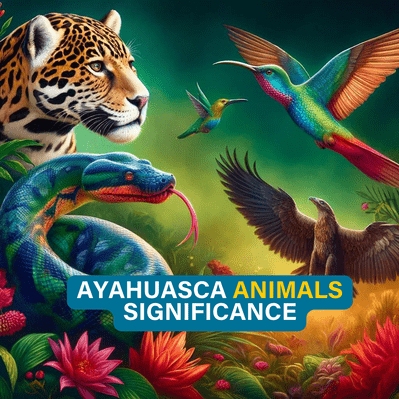
It’s possible to experience visions of animals in your Ayahuasca ceremony, which can be as diverse and vibrant as nature itself, and it can range from majestic to mystical. These animal visions can inspire awe or even a sense of fear, but beyond their immediate visual impact lies a deeper question: What do these animals symbolize? Each creature that appears during your ceremony carries with it a wealth of significance that can offer profound insights into your life and spiritual path. In this blog, we’ll explore the intriguing world of Ayahuasca animal visions; into what these creatures might represent and how you can interpret their presence in your journey towards self-discovery. Key takeaways: Some interpretations of Ayahuasca animals are deeply personal, similar to dream symbols unique to the person’s subconscious, while other interpretations are more archetype-based, with each animal representing specific messages. Animals in Ayahuasca visions are not only mesmerizing but serve as teachers. They reflect the wisdom of nature, teaching us lessons about patience, resilience, and the interconnectedness of life. Icaros, or sacred songs during Ayahuasca ceremonies, play a crucial role in connecting participants with the spirits of these animals. These songs enhance the spiritual experience by invoking the qualities of the animals they refer to. For indigenous cultures, the animals seen in Ayahuasca visions hold significant spiritual importance and are often considered guides or messengers from the spiritual world. Table of Contents Interpreting the Significance of Animals in Ayahuasca Visions Personal Interpretations of Animal Visions When it comes to understanding the animals that appear in your Ayahuasca visions, one school of thought is that it is highly personal. This aligns with modern dream interpretation, suggesting that the meaning of each animal is unique to the individual experiencing the vision. For instance, while a heart might universally symbolize love, someone with heart disease might associate it with health concerns instead. Similarly, the appearance of animals in Ayahuasca visions can be deeply personal. A spider, for example, could evoke fear in someone who dislikes them, whereas another person might admire the spider’s intricate web and mysterious nature, seeing it as a symbol of creativity and meticulous craftsmanship. Archetypal Interpretations of Animal Visions Another school of thought embraces the idea that each animal embodies a specific archetype or energy that carries a broader, more universally applicable meaning. This approach suggests that certain characteristics are associated with specific animals. For example, the jaguar, a top predator of the jungle, is often seen as a symbol of power and authority. Therefore, if a jaguar appears in someone’s Ayahuasca vision, it might suggest themes of power, dominance, or control are at play in that person’s life. Similarly, the spirit of each animal, much like the spirit of Ayahuasca itself, is seen as an integral part of the jungle’s spiritual ecosystem. The indigenous peoples’ connection with these animal spirits is profound and reflects a deep, mystical understanding that is represented by these symbols. But to emphasize, the meaning and interpretation of these symbols or visions depend highly on the context and emotional state of the person who is experiencing them at the time. For example, a person might see a jaguar and feel scared or fear, compared to another who sees him and feels the power and strength of the mighty jaguar. Embracing the Wisdom of Nature through Ayahuasca Animals In many indigenous worldviews, it is believed that wisdom comes with age, and nature, being ancient, holds profound insights. Nature operates in a state of perfect synchronicity and harmony, where every element plays its part effortlessly in the symphony of life. Unlike the often chaotic rhythm of human society marked by confusion and suffering, nature embodies a flow and balance. Through observation and silence, humans can learn immensely from the natural world—the steadfastness of rocks, the growth patterns of plants, and the behaviors of animals. During an Ayahuasca ceremony, when animals appear in visions, they are not mere figments of imagination but are considered teachers echoing the wisdom of nature. Each animal, by virtue of its intrinsic qualities and the role it plays in its ecosystem, can offer specific lessons. For instance, the patience and persistence of a spider weaving its web can teach us about dedication and artistry, while the adaptability of a chameleon might highlight the importance of flexibility and resilience in the face of life’s challenges. Learning Life Lessons from Ayahuasca Animals These encounters with animal spirits during Ayahuasca ceremonies are more than symbolic; they serve as direct channels to the ancient wisdom embedded in nature. By understanding and interpreting the significance of these animals, participants can gain insights into their own lives and the universal truths of existence. For example, the sight of a flock of birds moving in harmony could symbolize the importance of community and cooperation. Through these profound interactions, Ayahuasca not only connects us to the deeper spiritual realms but also reinforces our bond with the natural world, reminding us that we are part of a larger, interconnected ecosystem. By learning from the animals that appear in our ceremonies, we can start to realign our lives with the natural order, embracing the wisdom that nature has to offer and applying it to restore harmony within ourselves and in our interactions with the world around us. Must read blog: Origin of Ayahuasca – How was it discovered? Find out if Ayahuasca is right for you Will you be safe physically and emotionally? How will you be supported in the ceremony? How do the facilitators handle difficult situations? How will you be able to process the experience? You want change, but will your life be unrecognizable after Ayahuasca? + 13 things to consider before drinking Ayahuasca? The Spiritual Melodies of Ayahuasca Animals In Ayahuasca ceremonies, the icaros – traditional healing songs – can play a pivotal role in connecting participants to the spiritual realm. These songs are often dedicated to Mother Nature and various animal spirits, invoking their presence and wisdom within the ceremony. The icaros
Ayahuasca Ceremony What to expect in your Ayahuasca ceremony

Ayahuasca is not what you expect So you probably read multiple stories on the Internet about Ayahuasca, watched countless videos on it and you are really excited, nervous, afraid, hopeful and much more for your Ayahuasca ceremony. You are starting to develop a lot of expectations toward your ceremony. Starting to have a preconceived idea on how it will be like. And then, it is completely different. Maybe to a degree that you are even asking yourself, did it actually work for me…? The answer is yes, the Ayahuasca just works in a lot of different ways. So this Blog will help answer a lot of questions you have around your Ayahuasca ceremony, the timeline of the ceremony, what happens on the outside, and how your perceived experience might be like. Also, you will learn about the mental attitudes for your Ayahuasca ceremony and how those will assist you in your journey. At the same times there are certain rules and recommendations in an Ayahuasca ceremony and you will also learn about certain tips on how to go deeper in your journey. Key takeaways – what to expect in an Ayahuasca ceremony: An Ayahuasca ceremony has different elements like silence, music, smokes, incenses etc. Your Ayahuasca ceremony will be an introspective journey. In a way it is a mirror to your soul and you will receive the message that is necessary for you at this moment of your life. You might encounter repressed emotions. Also your Ayahuasca vision is not just what you see with your eyes (open or closed) but also about the understandings that come to you and what you feel in your heart. Table of Contents https://youtu.be/vnBUghnF4yE?si=xauly1mNU59YAtD0 Timeline for the ceremony: What happens on the outside Every tribe has their own way of doing the ceremony. The cofan tribe is generally known for a very strict way of conducint ceremony. Whereas the ceremonies of Yawanawa tribe from Brazil are filled with a lot of dancing and singing. It does not mean one way is better than the other, just that their tradition of working with the medicine is different. In the upcoming paragraphs I want to share the way we do our ceremonies which comes from the Kamsa Biya tribe. Before the ceremony the shaman blesses the Ayahuasca, he says his prayers. This prayers are the shamans way of connect with the great spirit. However, it is not about Dogma that this belief system is better than the other and is inclusive towards all religion. The smoke of copal is blown on each participant to neutralize and harmonize the energy before the ceremony as well. Each person drinks the Ayahuasca, also the shaman and his helpers. After that we sit down and meditate. You do want to keep in the Ayahuasca for at least 15 – 20 minutes. In case you do lose a track of time, withstand the first (and maybe second) urge to vomit. Usually the first effects of the medicine are noticeable after 45 minutes, however at times it can happen sooner or later. In the beginning of the ceremony we work a lot with silence but do start to accompany the ceremony with different instruments to also maintain a certain level of rhythm in the ceremony as well. In the tradition of the Kamsa Biya it is recommended to sit as much as possible. But especially before you have vomited. When you lay down, your body is accustomed to going to sleep and then the effects of the medicine will go down as well. Then after about 2 – 3 hours the time comes for a possible second cup, and even later some feel the calling for a third cup and they can do that as well. During the ceremony we move the energy with different smokes, incenses, tobacco, the Waira, music, various instruments as well as other tools in our repetoire. Generally you can say the ceremonies varies between silence and rhythms of the musics. What happens on the inside So, once you drink the Ayahuasca you sit down and basically wait for the medicine to take effect. The Ayahausca might be heavy on your body, some parts of you might also want to vomit it out right away. Breathe slowly and ask the Ayahuasca to stay in. Ideally you meditate on your intention. However, what I noticed in me (especially when I started drinking) that my thoughts used to be very loud and scattered. It’s basically the last resistance of the mind, ego to stay in control. It knows that something is coming that will challenge the mind / ego. Knowing this helps, do not put too much attention to it. We prepared a separate blog specifically about vomiting and the significance of purging in an Ayahuasca ceremony: Must read: Ayahuasca vomit explained: Why you vomit on Ayahuasca https://youtu.be/vNPdiAoRA74?si=zhw9ciOukgAdO5mk The effect of the Ayahuasca can start very subtle and build up, maybe it will be triggered by the music or other things happening throughout the ceremony. Or it just takes full effect right away. This is really individual. Mind chatter During the ceremony you might be thinking, how will I explain this to my friends and family, you might be thinking about what to share in the integration circle the next day. All of that is not important right now. You are distracting yourself with thoughts instead of feeling. Whenever you are encountering something, you really do want to stay as present with the feeling as possible. What you feel you can heal. You might also notice how you are even escaping from yourself in ceremony. That you put your attention on random things instead of really going to the core of things. It is ok, it is a process to be as fully present as possible. I just want to bring awareness to you that this might happen. Do not beat yourself about it, when this happens, just return to your breath and focus on yourself. What to do
