Ayahuasca vs Iboga: A complete Guide to Plant Medicine and Addiction Recovery

Iboga root bark and ayahuasca brew side by side, representing two plant medicine traditions from Africa and South America

They come from different continents. They speak different languages. They work on the body and psyche through entirely different mechanisms. And yet iboga and ayahuasca are increasingly mentioned in the same breath — by people exploring plant medicine for the first time, by those who have done one and are wondering about the other, and now by governments beginning to take seriously what indigenous communities have known for centuries. This article is not a travel brochure for either medicine. It is an honest, experience-informed comparison of two of the most powerful healing tools humanity has ever encountered — what they are, how they differ, when each one is the right choice, and what it actually feels like to be transformed by them. What Is Iboga — and What Is Ibogaine? Before anything else, a distinction most articles skip over: iboga and ibogaine are not the same thing, and understanding the difference matters enormously. Iboga refers to Tabernanthe iboga, a slow-growing shrub native to the rainforests of Central West Africa — primarily Gabon and Cameroon. The root bark has been used for centuries in the Bwiti spiritual tradition as a sacred medicine for initiation, healing, and communion with ancestors. An iboga ceremony in this context is not a weekend retreat. It is a profound, multi-day rite of passage embedded in a living cosmological framework. Ibogaine is the primary psychoactive alkaloid isolated from that root bark — the molecule western science has studied and administered in clinical settings, particularly for its remarkable capacity to interrupt opioid and stimulant addiction. When someone travels to a clinic in Mexico for “ibogaine treatment,” they are receiving a standardized compound in a medical room. When a Bwiti initiate undergoes an iboga ceremony in Gabon, they are participating in something else entirely — a tradition held within community, where the whole plant is the medicine. Both have profound value. They are not interchangeable. What a Real Iboga Initiation Looks Like A close friend of mine — not someone struggling with addiction, but someone genuinely seeking depth — traveled to Africa for a traditional Bwiti iboga initiation. The process lasted five days. Every four hours, he had to take a plant bath, a ritual cleansing integral to the ceremony. The rhythm made consistent sleep impossible. There was one iboga ceremony. He came back changed. He describes it as one of the most impactful experiences of his life. Having worked in plant medicine for over thirteen years, what strikes me is how different that structure is from what most Westerners imagine when they think of “doing iboga.” The African ceremonial container is not a delivery mechanism for a molecule. It is a living system of meaning and community that holds the journey in ways a clinical room simply cannot replicate. What Is Ayahuasca? Ayahuasca is a sacred brew prepared from two Amazonian plants: the Banisteriopsis caapi vine — containing MAO-inhibiting alkaloids — and Psychotria viridis leaves, which contain DMT. Without the MAOI from the vine, orally consumed DMT would be metabolized before reaching the brain. Together, they create a biochemical synergy that produces one of the most visionary states known to human experience. Indigenous communities across Peru, Brazil, Colombia, and Ecuador have worked with ayahuasca for centuries. The Colombian tradition — known as yagé — deserves particular mention, as it is often overshadowed by the Peruvian narrative dominating the global retreat industry. The taitas of Putumayo, from the Cofán, Siona, and Inga traditions, carry a lineage as deep and alive as any in South America. At Harmonica Retreat, we work within and alongside these Colombian roots. Ceremonies are typically held at night, guided by a curandero, and woven together by icaros — healing songs that serve as map and compass for the journey. Participants may experience vivid visions, emotional catharsis, spiritual encounters, and the famous la purga — the physical purging that many traditions regard not as a side effect, but as a central part of the healing itself. This is a summary of how a ceremony looks like, we created a separate guide talking in depth about “what to expect in an Ayahuasca ceremony.” Experience: The Texture of Each Medicine This is where most comparison articles fall short — they describe duration and receptor targets, but not what it actually feels like. An iboga experience has often been compared to watching your life as a film. There is a cognitive, almost analytical quality to it — relentless and honest. You do not drift through visionary landscapes; you sit with yourself, in confrontation with the patterns and wounds that have accumulated across a lifetime. Nothing hides. The physical demands are significant: nausea, ataxia (loss of coordination), and profound fatigue accompany a 12–36 hour journey, typically experienced alone in silence. An ayahuasca experience is more relational, more emotionally somatic. Where iboga turns inward toward the mind, ayahuasca tends to open the heart. Visions are rich and symbolic — geometric patterns, jungle imagery, ancestral presences. The emotional current is strong. Crying is common. A sense of communion with something larger — nature, lineage, the sacred — is frequently reported. The ceremony is communal, held in a shared space. Iboga vs. Ayahuasca — at a glance Category Iboga / Ibogaine Ayahuasca Origin Central West Africa — Gabon, Cameroon Amazon basin — Colombia, Peru, Brazil Plant source Tabernanthe iboga root bark Banisteriopsis caapi vine + Psychotria viridis leaves Active compound Ibogaine alkaloid DMT + harmala alkaloids (MAOI) Tradition Bwiti initiation (ceremonial) / clinical (ibogaine) Amazonian shamanism — Duration 12–36 hours 5–8 hours Experience quality Cognitive, introspective — “watching your life as a film” Visionary, emotional — comprehensions, heart-centered Setting Solitary, silent, minimal stimuli Introspective ceremony Purging Uncommon Common — considered part of the healing Best for Physical addiction reset, opioids, stimulants Trauma, depression, spiritual growth, emotional healing Addiction recovery Physical dependency Emotional roots Cardiac risk Yes — ECG screening mandatory Low (main risk: MAOI drug interactions) Medical supervision Required Pre medical check-up highly advised Sessions needed Typically one Multiple ceremonies over time Global availability Limited —

Ayahuasca vs Bufo: What Is Bufo and How Do They Really Differ?

ayahuasca vs bufo

Ayahuasca and Bufo (5-MeO-DMT) are two of the most powerful sacred medicines available today. Ayahuasca, the master teacher of the Amazon — unfolds over 5–8 hours, guiding you through visions, emotional release, and deep reflection — always with the intensity you’re ready for. Bufo, derived from the Sonoran Desert toad — just 15–45 minutes, but often far more intense — dissolving the ego and launching you into a direct experience of pure consciousness. Both involve DMT. Both are used in ceremonial settings. Both can be profoundly life-altering. But that’s largely where the similarities end. Understanding the real differences — in duration, effect, tradition, risk, and purpose — will help you see which medicine, if either, genuinely aligns with where you are right now. 📌 A note before we begin: Every ceremony is unique. What you read here is a general framework based on five years of facilitation experience and collaboration with researchers at Imperial College London. Use this guide to inform your thinking — not to replace an honest conversation with an experienced facilitator. What Is Bufo Alvarius (5-MeO-DMT)? Bufo refers to the secretion of the Bufo alvarius toad — the Sonoran Desert Toad — native to northern Mexico and the southwestern United States. Its venom contains 5-MeO-DMT, one of the most potent psychedelics known to science. Unlike the N,N-DMT in ayahuasca, 5-MeO-DMT is less visual and far more overwhelming — an immediate dissolution of the self into pure, undifferentiated consciousness. The secretion is dried, then smoked or vaporized. Effects begin within seconds, peaking over 15–45 minutes — though most participants report that time loses all meaning. What Does Bufo Feel Like? A sudden, complete dissolution of the ego — the sense of being a separate self disappears entirely A feeling of merging with everything — universal oneness, infinite love, or pure consciousness Largely non-visual — rarely complex visions or imagery Intense and overwhelming — even for those experienced with other psychedelics For some, the most profound experience of their life. For others, deeply disorienting — underscoring why experienced facilitation is not optional. A Note on the Name Bufo, 5-MeO-DMT, toad medicine, and Sapo are often used interchangeably. Strictly, Bufo refers to the toad-derived secretion, while 5-MeO-DMT can also refer to a lab-synthesized version — increasingly common for ethical reasons. More on this in the sourcing section. What Is Ayahuasca? Ayahuasca is a sacred brew made from the Banisteriopsis caapi vine and DMT-containing leaves — most commonly Psychotria viridis. The vine acts as a natural MAO inhibitor, making the DMT orally active and producing an experience lasting 5–8 hours. For centuries, indigenous communities across Peru, Colombia, and Brazil have used ayahuasca for healing, spiritual guidance, and ancestral connection — guided by shamans using sacred songs known as icaros. The experience unfolds gradually, through waves of visions, emotional release, and introspection — showing you exactly what you need to see, at the intensity you’re ready for. 👉 Read our full guide: What Is Ayahuasca? Bufo vs Ayahuasca: Key Differences at a Glance   Ayahuasca Bufo (5-MeO-DMT) Origin Amazonian plant brew Sonoran Desert toad secretion Active compound N,N-DMT + MAOIs 5-MeO-DMT Administration Drunk as a tea Smoked or vaporized Duration 5–8 hours 15–45 minutes Onset Gradual (20–60 min) Immediate (seconds) Visuals Rich, complex, symbolic Mostly non-visual — “whiteout” Purge Physical (vomiting, crying) Psychological (emotional release) Ego dissolution Possible, gradual Common, sudden and complete Ancestral lineage Unbroken, thousands of years Interrupted, partially reconstructed Frequency 3–15 ceremonies / 12–18 months, or periodically (once a year) Once or twice per year Legal status Varies by country Varies by country Best suited for Deep emotional healing, gradual transformation Rapid reset, ego dissolution, pattern breaking Facilitation required Yes Yes  Comparing the Experiences Duration and Onset Ayahuasca begins slowly — effects within 20–60 minutes, building over 5–8 hours. This gradual unfolding gives you time to process what arises and work through material at the medicine’s pace. Bufo is the opposite. Within seconds of inhaling, you are inside the experience — no gradual build, no time to orient. The peak lasts 15–45 minutes, though clock time becomes completely irrelevant. Visuals vs Non-Visual States Ayahuasca produces rich, complex visuals — geometric patterns, symbolic imagery, encounters with plant spirits or ancestral presences. These visions carry personal meaning and serve as the medicine’s primary language. Bufo is largely non-visual. Rather than showing you imagery, it dissolves the viewer entirely — a whiteout: a vast, undifferentiated field of consciousness with nothing to interpret. Ayahuasca gives you material to work with; bufo removes the one who works with material altogether. The Purge — Physical vs Psychological Ayahuasca commonly involves physical purging — vomiting, crying, shaking. In traditional contexts this is a cleansing process, not a side effect. Bufo rarely involves physical purging. The release is psychological — sudden emotional discharge through crying, laughter, primal sounds, or bodily shaking. Its intensity can catch people off guard, making skilled facilitation essential. Ego Dissolution and Consciousness With ayahuasca, ego dissolution is earned through process — the medicine guides you through your attachments and stories before opening into deeper states. It can take multiple ceremonies to reach this depth. With bufo, ego dissolution is immediate and non-negotiable — you are launched into it within seconds, regardless of readiness. No negotiation, no easing in. “Ayahuasca walked me to the door and helped me open it. Bufo kicked the door down before I even knew there was a door.” — Retreat participant, Harmonica Retreat 2024 https://www.youtube.com/watch?v=Wl3aKOkc4z4 The Ancestral Lineage — Why It Matters More Than People Think Most people focus on duration or intensity. Far fewer ask: how deep does the wisdom behind this medicine actually go? Ayahuasca: An Unbroken Chain of Wisdom Ayahuasca has been used continuously in the Amazon for thousands of years. Every element of the ceremony — the songs, the supporting plants, the ceremonial tools, the protocols for difficult experiences — has been tested, refined, and passed down through generations of dedicated practitioners. A spiritual container built from millennia of accumulated knowledge Time-tested safety practices
What Is Yagé? The Complete Guide to Colombia’s Sacred Plant Medicine and How It Differs from Ayahuasca

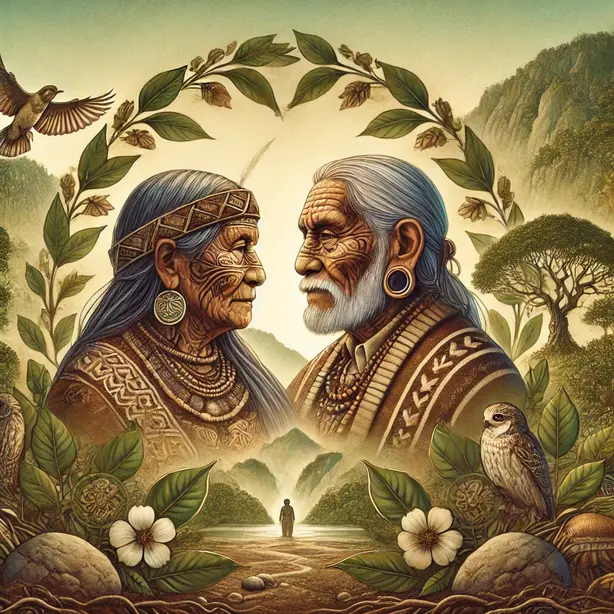
abuelo abuela

At their core, ayahuasca and yagé are the same medicine. They share the same vine, the same fundamental purpose, and the same essential invitation: to look honestly at yourself — at the mirror of your own soul — and see what is really there. What differs is the cultural container. The way the brew is prepared, the ceremony format, the songs, the tradition behind the taita guiding the night — these vary significantly between Colombia, Peru, and Brazil. In this guide, we break down what yagé is, what makes the Colombian tradition distinct, and what you can genuinely expect. What Is Yagé? Understanding Colombia’s Sacred Plant Medicine Yagé (pronounced yah-HEY) is a psychoactive plant brew made from two plants native to the Amazon basin. The vine — Banisteriopsis caapi — contains harmala alkaloids that act as MAO inhibitors. The leaf — chagropanga or chacruna depending on the tradition — contains DMT, the compound responsible for the visionary experience. Neither plant works fully alone. The vine’s alkaloids block the gut enzyme that would otherwise destroy the DMT before it reaches the bloodstream. Together they produce an experience lasting five to eight hours. Indigenous communities across Colombia, Ecuador, Peru and Brazil have worked with this medicine for thousands of years — as a tool for healing, self-reflection, and accessing deeper layers of knowledge. In the Colombian tradition it is considered a planta maestra — a master plant teacher. The visions it produces are understood as teachings. Ceremonies are held at night under the guidance of a Taita. Purging — nausea and vomiting — is an expected part of the process, understood as physical and emotional cleansing. Yagé vs Ayahuasca: Are They the Same Thing? Yagé and ayahuasca are not the same thing — but the overlap is significant enough that drawing a hard line between them misses the point. Different Vocabulary, Same Medicine Part of the confusion comes down to language: Colombian vocabulary: Yagé (finished brew) = The vine (called ayahuasca) + The leaf (called chagro or chagropanga) Worldwide vocabulary: Ayahuasca (finished brew) = The vine (called caapi) + The leaf (called chacruna) In Colombian tradition, ayahuasca refers to the vine — one ingredient inside the yagé. Worldwide, ayahuasca refers to the finished brew. The same word, two different meanings depending on where you are.   Ayahuasca Yagé Origin Amazon basin Amazon basin Number of plants Two Two Context Ceremonial Ceremonial Purpose Healing, self-reflection, spiritual insight Healing, self-reflection, spiritual insight The vine Banisteriopsis caapi (called caapi) Banisteriopsis caapi (called ayahuasca) The leaf Chacruna (Psychotria viridis) Chagro / Chagropanga (Diplopterys cabrerana) Ceremony style Dark, silent, icaros Music, guitar, rezos, periods of silence Brew concentration Generally less concentrated Generally more concentrated Purging Present Expected part of the process Guiding figure Shaman / curandero Taita Primary tradition Peru, Brazil Colombia, Ecuador The Differences Between Yagé and Ayahuasca Botanical Differences — Chaliponga vs Chacruna Both brews use the same vine — Banisteriopsis caapi. The difference, according to online consensus, lies in the leaf. Ayahuasca traditionally uses chacruna (Psychotria viridis), while Colombian yagé uses chagropanga (Diplopterys cabrerana). In practice this distinction is harder to verify than most articles suggest. Elders don’t use scientific names — they work from lineage knowledge and regional plant names. Different regions use different names for the same plant. The botanical difference is likely real, but not as clearly defined as the internet implies. Preparation and Ceremony Style Peruvian ceremonies take place in darkness, with long stretches of silence broken by the icaros of the shaman — sacred healing songs central to how the medicine is guided through the night. Colombian ceremonies have a different energy. Medicine Music plays a larger role, including guitar, with alternating periods of sound and silence. Colombian taitas sing rezos — related in purpose to icaros but carrying their own distinct lineage and form. In Brazil the format shifts again. Yet across all three traditions, the essence of what is being worked with remains the same. There is a preparation element for Yage, especially the mental aspect (the willingness to look within) and arriving with humility and respect is important. The physical preparation isn’t as tedious as in Peru.  Colombian Yagé vs Peruvian Ayahuasca Colombian yagé is generally described as more concentrated and more purgative than what most people encounter in Peru. We regularly hear from participants who needed three ceremonies to connect with the medicine in Peru, who then connect deeply on their first or second night in Colombia. The reasons are debated — overharvesting in Peru, differences in brew concentration, and some accounts suggesting higher DMT content in Diplopterys cabrerana. Likely a combination of all three. How Environmental Differences Might Affect the Properties of the Plant I had a conversation with a researcher who attended our Ayahuasca retreat and she mentioned an interesting observation about cacao: its properties can vary depending on which side of a hill it grows on. This concept, while not directly proven for Ayahuasca, opens up an intriguing line of thought. If the environment – such as soil composition, altitude, climate, and other ecological factors – can influence the properties of one plant, it’s possible that Ayahuasca vines growing in different regions, like Peru and Colombia, might also exhibit slight variations in their properties. Yagé in Colombia — Tradition, Culture and Ceremony Indigenous Origins — Siona, Cofán, Kamsá Biyá and the Putumayo Yagé has been at the heart of indigenous life in the Colombian Amazon for centuries. Among the peoples of the Putumayo — the Siona, Cofán, Coreguaje and Kamsá Biyá — it is a medicine of knowledge, inseparable from how these communities understand healing and community. We work directly with the Kamsá Biyá tradition at Harmonica Retreat. The Role of the Taita Taita means father — and that is precisely what the role embodies. The taita holds the community, carries the lineage knowledge of how to prepare and work with the medicine safely, and his authority comes from years of apprenticeship under elder taitas — drinking the medicine, learning the
Ayahuasca or Peyote? Key Differences & What’s Right for You

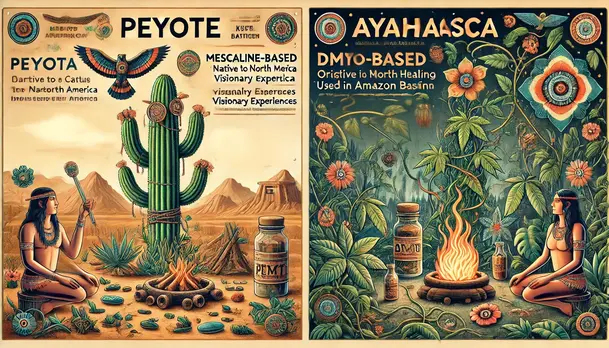
ayahuascavspeyote

Ayahuasca and peyote are both sacred plant medicines with deep roots in indigenous tradition. Both alter consciousness, both are used ceremonially, and both carry profound spiritual significance. But they are not the same — and understanding the differences matters before you consider either path. Important note: Different traditions have their own unique ways of conducting these ceremonies. This is a general overview — your experience can vary significantly depending on who is facilitating and which tradition they carry. Nothing can fully prepare you for your own ceremony. Have open conversations with the facilitators you choose to work with and make your own informed decision. Overview of differences between Ayahuasca and Peyote    Ayahuasca Peyote Origin Amazon rainforest, South America Chihuahuan Desert, Mexico and southern US Active compound DMT (dimethyltryptamine) Mescaline Form Brewed drink (vine + leaves) Cactus buttons, chewed or as tea Duration 5–8 hours 12–14 hours Intensity Stronger, more visionary Gentler, more grounding Purging Common Rare Ceremony style Individual inner journey Communal, structured, prayer-led Legal status (Colombia) Legal Not applicable Origins and cultural roots What is ayahuasca? Ayahuasca is a sacred brew from the Amazon basin, made from the Banisteriopsis caapi vine and the leaves of Psychotria viridis (chacruna). The vine contains MAO inhibitors that allow the DMT in the chacruna leaves to become orally active. In Colombia, ayahuasca is also known as yagé — a name carrying its own distinct lineage, tended for generations by the Kamentsa and Inga peoples. For a deeper dive into Ayahuasca, its history and how it works, read our full guide on “What is Ayahuasca.” What is peyote? Peyote (Lophophora williamsii) is a small, spineless cactus native to the Chihuahuan Desert of Mexico and the southern United States. It contains mescaline as its primary psychoactive compound — one of over 60 alkaloids in the plant. It has been used for thousands of years by Native American tribes including the Huichol, Tarahumara, and members of the Native American Church. Unlike ayahuasca, peyote grows extraordinarily slowly — 15 to 25 years to reach maturity. This makes it scarce and increasingly endangered. Its collection is prohibited except for traditional indigenous use. How are they viewed spiritually? Ayahuasca is known as the Grandmother spirit — gentle, allowing, guiding participants through their inner world. Peyote is the Grandfather — stern, structured, grounding in its teachings to those who meet him. They are seen as complementary forces, each offering a distinct door into the same deeper reality. Active compounds — DMT vs mescaline What is DMT and how does it work? DMT (dimethyltryptamine) is the primary psychoactive compound in ayahuasca. On its own it is broken down rapidly in the digestive system before reaching the brain. The Banisteriopsis caapi vine solves this by providing beta-carbolines — natural MAO inhibitors that allow the DMT to become orally active, producing an experience lasting four to six hours. DMT acts on the brain’s 5-HT2A serotonin receptors, producing vivid visions, deep emotional processing, and what many describe as contact with plant intelligences or spiritual dimensions. What is mescaline and how does it work? Mescaline is the primary psychoactive compound in peyote. Like DMT it acts on 5-HT2A serotonin receptors, but unlike DMT it is orally active on its own — no additional plant is needed. Effects begin two to four hours after ingestion and last 12–14 hours. A word on reducing plants to their chemistry Indigenous traditions — the Huichol, the Kamentsa, the Yawanawá — do not relate to these medicines through chemistry. These plants are not delivery mechanisms for molecules. They are living intelligences with their own spirit and wisdom. When science reduces ayahuasca to DMT or peyote to mescaline, something important gets lost. Peyote contains over 60 alkaloids. Ayahuasca contains more than 10 beyond the most commonly discussed compounds. Even the full scientific picture is more complex than the headline molecules suggest — and still does not capture what indigenous peoples mean when they say these plants teach and heal. The ceremony experience What happens in an ayahuasca ceremony? An ayahuasca ceremony takes place at night. Participants drink the brew and then lie down or sit in a darkened ceremonial space while the facilitator sings icaros — healing songs — to guide the experience. The journey is largely internal and individual. While participants are physically together, each person moves through their own process, guided by the medicine. For a full picture of what an Ayahuasca ceremony is like, read our guide on “What to expect in an Ayahuasca ceremony“ What happens in a peyote ceremony? Peyote ceremonies are structured very differently — communal, prayer-led, and built around collective participation. Participants sit in a circle around a sacred fire for the duration of the night. The physical discipline demanded is striking. Participants sit upright for the entire ceremony — up to 12 hours — without a backrest. This posture is said to be symbolic: likened to galloping on horseback across the landscapes of Mexico, embodying a strong and resolute stance. Maintaining it for twelve hours is genuinely demanding. Specific protocols govern entering and leaving the circle. There is a saying that the ceremony leader needs to be “good with his words” — because the words spoken carry significant weight for everyone present. A friend who attended a peyote ceremony shared a teaching from the tribe leader about water. The leader described water as an advanced technology — essential not only for our bodies but for the entire web of life. Such teachings are a reminder of what we take for granted and of our interconnectedness with the natural world. The Blue Deer holds deep spiritual significance in Huichol tradition. The deer is the guide between worlds — the being that first showed the Huichol where to find peyote in the desert. To encounter the Blue Deer in ceremony is considered a profound blessing. Duration — how long does each last? Ayahuasca effects begin 30–60 minutes after drinking and last five to eight hours. Peyote effects begin two to four hours after
What is Rapé (Rapeh, Hapé, Hapey)? Uses, Benefits & Effects

rapeh

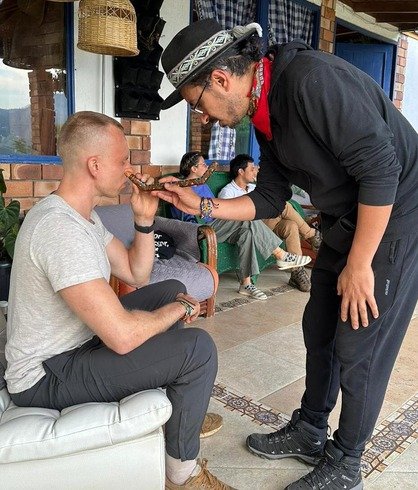
Rapé — also written as rapeh, hapé, hapey, or rapéh — is a sacred plant medicine used by indigenous tribes of the Amazon for thousands of years. It comes as a fine powder, traditionally made from a blend of tobacco and medicinal plants, and is administered through the nostrils using a special pipe. If you’ve recently heard about rapé in a spiritual or ceremonial context, or you’re preparing for an ayahuasca retreat and wondering what role it plays, this guide covers everything you need to know — from what it’s made of and how it’s applied, to what it actually feels like and how it works alongside ayahuasca. What is rapé made of and where does it come from? Rapé originates from the Amazon basin, with the greatest variety of blends coming from Brazil. It has been used for centuries by tribes including the Kaxinawá, Yawanawá, Katukina, Nukini, and Kuntanawa — each with their own traditional recipes, rituals, and intentions around its use. At its core, rapé is made from Nicotiana rustica — a potent variety of tobacco significantly stronger than the commercially grown Nicotiana tabacum most Westerners are familiar with. This is combined with the ash of sacred or medicinal trees, and depending on the blend, aromatic plants, roots, seeds, and other botanicals. The exact composition of many traditional blends remains a closely guarded secret of the tribe that produces them. The result is an extremely fine, dry powder — typically greyish in colour — with a consistency far finer than anything you’d associate with tobacco in a Western context. Rapé benefits — spiritual, mental and physical Rapé works on several levels simultaneously, which is part of what makes it difficult to describe to someone who hasn’t experienced it. The benefits reported by practitioners and participants span the spiritual, mental, emotional, and physical. Spiritual benefits Energetic cleansing and alignment Rapé is widely used to cleanse and clear the energetic field. Shamans work with it to re-align with their energy channels, deepen their connection to the spiritual world, and remove what is described as stagnant or negative energy. For participants, it can create a profound sense of being present — of arriving fully in the body and in the moment. Overcoming emotional and spiritual blockages Rapé is effective in breaking through emotional and spiritual blockages. Sometimes there are things we struggle to push through or let go of on our own. The plant medicine can assist in this process, helping us release and move past obstacles that have become lodged — whether through old patterns, unresolved grief, or accumulated tension. Processing the past Rapé can bring up memories and feelings from the past, prompting emotional release and integration. This can be a powerful tool for healing, as it helps you confront and process experiences you may have been carrying without fully acknowledging them. Mental and emotional benefits Breaking free from repetitive thoughts One of the most consistently reported effects of rapé is the interruption of repetitive thought patterns. Have you ever felt trapped in endless loops of circular thinking — turning the same situation over and over without resolution? Rapé can break that cycle with striking efficiency. Oliver, founder of Harmonica Retreat, describes his personal relationship with the medicine this way: “I tend to use rapé only in very specific situations. The most common is when I notice I’m emotionally reactive about a situation or person — when I have repetitive thoughts that aren’t serving me or the relationship. I want to let go of the emotional charge and see things more clearly. Rapé consistently helps me do that. It interrupts the loop and brings me back to something more grounded.“ Enhancing meditation When you incorporate rapé into your meditation practice, you connect with the energy and spirit of that particular blend of plants. This connection can silence compulsive thoughts and help you tune in to your inner self, allowing messages of clarity and peace to come through. These messages can manifest in unexpected ways — for example, you might become aware of a physical sensation, like tension in the back or chest, that you had been unconsciously suppressing. Rapé doesn’t cause these sensations; it simply helps you become present to what’s already there. Physical benefits Relieving headaches Rapé can work wonders for headaches. While it might initially intensify the discomfort — as the medicine pushes through — this is part of its process. Most people find that pushing through that initial intensity brings genuine relief and clarity on the other side. Clearing nasal congestion Rapé’s cleansing properties work directly on the nasal passages. If you struggle with congestion, a runny nose, or chronic sneezing, rapé can clear the passages and make breathing noticeably easier — a purely physical effect that happens alongside whatever is occurring on the energetic level. Boosting energy and alertness Rapé provides a distinct energy lift — partly through its nicotinic content, which stimulates the release of epinephrine, acetylcholine, and dopamine, and partly through what practitioners describe as the removal of stagnant energy. The result is a sense of being more awake, alert, and focused that many people find lasts well beyond the acute phase of the experience. How is rapé applied? Rapé is not snorted, sniffed, or inhaled in the conventional sense. It is blown forcefully into the nostrils using a special pipe. There are two types of pipe used: Tepi — a longer pipe used when one person administers rapé to another. One end goes to the nostril of the recipient, the other end is blown by the practitioner. Kuripe — a shorter, V-shaped pipe used for self-administration, connecting your own mouth to your nostril. The process, when done with care and intention, unfolds something like this: Set your intention. Before anything else, take a moment to clarify what you’re bringing to the medicine. Whether that’s mental clarity, emotional release, grounding, or preparation for ceremony — the intention shapes the experience. Prepare your breath. Traditions vary slightly here: some suggest exhaling fully then

Ayahuasca vs DMT

Ayahuasca vs DMT

There are many different plant medicines and substances that can put us in an altered state of consciousness. Understandably, we are curious about how these substances affect us, their benefits, and what we can expect from them. Should we try them? Which one fits us better? In this blog, we dive into the comparison between Ayahuasca and DMT. Key takeaways:  Both Ayahuasca and DMT contain the psychedelic compound DMT. However, Ayahuasca includes MAO inhibitors that make the DMT orally active and prolong the experience, whereas DMT is usually smoked for a shorter, intense trip. Indigenous communities see Ayahuasca as a sacred plant medicine facilitating a connection with the spirit world, beyond mere chemical reactions. They emphasize the spiritual and holistic aspects of the Ayahuasca experience over the scientific focus on DMT. While both Ayahuasca and DMT have potential therapeutic benefits, Ayahuasca is known for its comprehensive healing process, including physical, emotional, and spiritual cleansing. Smoking DMT can offer quick insights. Table of Contents Disclaimer We are all individuals with different backgrounds, past experiences, levels of intention, and maturity, among many other factors. While the mind often likes to compare and judge, it’s important to remember that each plant medicine offers its own unique angle of healing. What is shared in this blog (and in other blogs comparing different plant medicines) are general guidelines. These are not universal truths and may be perceived differently by each individual. I just want to highlight that these are just guidelines. Ultimately, nothing can substitute for your own personal experience with a specific plant medicine. Active Ingredient: DMT Ayahuasca and DMT share the same major active ingredient: Dimethyltryptamine, commonly known as DMT. This powerful compound is often referred to as the “spirit molecule” in documentaries and literature due to its profound effects on consciousness. DMT is known for inducing intense, often spiritual experiences, where individuals report seeing divine beings, connecting with higher consciousness, or experiencing alternate dimensions. This unique ability to facilitate such deep and transformative experiences naturally sparks interest in those curious about exploring altered states of consciousness. In Ayahuasca, DMT is derived from specific plants, typically combined with a MAO inhibitor to make it orally active and prolong the experience. In its pure form, DMT is usually smoked or vaporized, leading to a much shorter, but equally intense journey. The Indigenous Viewpoint on Ayahuasca vs DMT When discussing Ayahuasca with indigenous communities, they often express discomfort with the idea that DMT alone is responsible for all the effects of Ayahuasca. For them, this perspective represents a form of scientific rationalisation and simplification of the plant, just as a way to explain it using the logical mind. However, these profound experiences are not meant for the logical mind to dissect; they are for the spirit to receive and begin transforming our inner being.  Indigenous masters have historically achieved remarkable feats with Ayahuasca, viewing it not just as a chemical interaction but as a sacred guide. A recent example that highlights this made international headlines: when a plane crashed in the Amazon, an indigenous elder master drank Ayahuasca to aid in finding the crash site. Remarkably, he was able to locate the wreckage and save the surviving children, where the radar technology wasn’t working.  This story emphasizes the indigenous’ ability to connect with the spirit of the jungle and other plants, reinforcing their belief that Ayahuasca facilitates a connection with the spirit world, guiding and healing them in ways beyond mere chemical reactions. For indigenous people, Ayahuasca is far more than a substance that induces “hallucinations”; it is a spiritual tool that helps them navigate and understand their world. This holistic approach contrasts with the Western tendency to reduce the experience to its biochemical components. You can find out more about the indigenous perspective on the blog: What is Taita?  To add –  there are more than 13 different alkaloids in Ayahuasca, suggesting a complexity far greater than the DMT reaction alone. Must read blog: How does Ayahuasca affect the brain?   Find out if Ayahuasca is right for you Will you be safe physically and emotionally? How will you be supported in the ceremony? How do the facilitators handle difficult situations? How will you be able to process the experience? You want change, but will your life be unrecognizable after Ayahuasca? + 13 things to consider before drinking Ayahuasca? Smoking DMT In my early 20s, I personally smoked DMT a few times. To be honest, nothing too spectacular happened. I saw some colors, but I never really “broke through.” I tried it in introspective settings as well as casually on a friend’s couch while hanging out. Looking back, I’m glad I didn’t break through because I don’t think I was truly ready for that experience. Many people who smoke DMT can be considered “psychonauts” – individuals keen on exploring their consciousness. While there is often an introspective element, there’s usually a significant overlap with the recreational use of psychedelics. I’ve had participants at retreats who were somewhat regular users of DMT. Initially, they reported similarities between Ayahuasca and DMT. One person even expressed disappointment, saying he expected more from Ayahuasca and felt he could have had similar experiences without traveling thousands of miles. However, in the following Ayahuasca ceremony, the intensity increased significantly, giving him an experience unlike anything he had encountered before. This has happened with multiple people who have tried both DMT and Ayahuasca. This shift often occurs when there is a lack of respect for Ayahuasca. Either nothing significant happens, or the Ayahuasca experience becomes very intense, emphasizing its non-recreational nature and perhaps highlighting the underlying reasons for seeking substance-induced experiences in the first place. Ayahuasca vs DMT: Chemically Extracting the Experience From my limited perspective, smoking DMT feels like a bit of a shortcut. It’s comparable to the difference between LSD and magic mushrooms. Both have similar active components, but those who have tried both can sense the difference – the “spirit” is often felt to be missing in

Ayahuasca vs magic Mushrooms – healing through laughter or through crying?

ayahuasca vs magic mushrooms

This blog explores the nuances and commonalities of these two powerful ancestral medicines, Ayahuasca vs mushrooms, guiding you to better understand which might resonate more with your current stage of personal and spiritual development. Introduction: Ayahuasca, a traditional Amazonian plant medicine, or magic mushrooms, have their own rich history of use in various cultures. Both offer pathways to profound insights and transformations. Through this exploration, we’ll compare their effects, the context of their use, and the experiences they facilitate, providing you with a clearer picture of what each might bring to your journey of self-discovery and healing. Key takeaways: Both magic mushrooms and Ayahuasca can create breakthrough experiences, understandings about our lives and be a profound catalyst for change in a person. It is important to do these medicines in a “set and setting” where one feels safe and is well taken care of. Ayahuasca is always conducted in a ceremonial context with experienced shamans / Taitas / facilitators which is a great benefit The purging is a tremendously powerful element of an Ayahuasca ceremony, which allows us to energetically let go of things that no longer serve us. In some ways mushrooms can be used in a more open, experimental way. Table of Contents   Disclaimer: Please note that Ayahuasca and magic mushroom ceremonies vary widely across different cultures and traditions. The information presented here is a broad perspective, but individual experiences can differ significantly based on the specific practices of the ceremony leaders and the setting. Furthermore, while we offer a general outline of how Ayahuasca and mushroom ceremonies are typically conducted, remember that your personal experience can vary greatly. There’s no definitive guide that can fully prepare you for the unique, subjective journey you will experience with either Ayahuasca or magic mushrooms. Therefore, it is crucial to communicate with your ceremony facilitators, ensuring they can address your questions and concerns. Ultimately, the choice of which path to follow should be a personal decision, made after careful consideration and in alignment with your own spiritual and healing goals. Similarities Exploring the similarities between magic mushrooms and Ayahuasca reveals how both of these powerful substances serve as potent tools for deep introspection and self-discovery. At their core, both facilitate a profound journey into the subconscious, acting as mirrors that reflect the innermost aspects of our psyche. When you engage with either magic mushrooms or Ayahuasca, you go on a journey that can illuminate various aspects of your life. These medicines can offer clarity on what you’re doing well and areas where you might be straying off your desired path. They provide opportunities to understand and correct personal missteps, helping to align your actions more closely with your true intentions and values. One of the most significant aspects of both experiences is the ability to access and feel suppressed emotions. This emotional unearthing can be intense, but it is often necessary for healing and growth. Both magic mushrooms and Ayahuasca can act as catalysts for confronting and processing unresolved issues and traumas that continue to influence your present life. Additionally, these psychedelics can provide a stark reality check, offering a clear-eyed view of your life as it is, unclouded by the habitual narratives we tell ourselves. This unvarnished truth can be challenging, but it is often a crucial step towards making meaningful changes. Both magic mushrooms and Ayahuasca also have the potential to impart visions or insights about the future, helping to shape a vision for the life you aspire to live. This forward-looking aspect can be incredibly empowering, providing direction and motivation for personal and spiritual development. Origins of Ayahuasca and Magic Mushrooms: The origins of Ayahuasca and magic mushrooms are as rich and diverse as the experiences they offer. Understanding where these medicines come from adds depth to our appreciation of their roles in various cultures and traditions. Ayahuasca, with its roots deeply linked to the Amazon rainforest, has been a cornerstone of spiritual and healing practices among indigenous tribes for centuries. It is revered for its profound healing properties. It plays a significant role in the cultural fabric of Amazonian tribes, being used in rituals and ceremonies for spiritual guidance, community bonding, and medicinal purposes. Magic mushrooms, on the other hand, boast a more global heritage. These fungi have been used in spiritual and healing contexts across many different cultures and regions. Perhaps the most well-known traditional use of magic mushrooms is in Mexico, particularly among indigenous groups like the Mazatec, Mixtec, Nahuatl, and Zapotec. These regions have a long history of using psilocybin mushrooms (the psychoactive compound found in magic mushrooms) in their religious rituals, healing practices, and ceremonies. The use of these mushrooms in such contexts is often guided by shamanic figures, who help navigate the spiritual journey and ensure the safety and wellbeing of participants. Both share a common thread of being deeply respected and carefully used within their respective cultural contexts, highlighting their importance as tools for spiritual exploration and healing. Must read Blog: Ayahuasca origin – how the indigenous discovered Ayahuasca Differences between Ayahuasca vs magic mushrooms One key difference between Ayahuasca and magic mushrooms lies in their accessibility and the contexts in which they are typically used. Accessibility: Magic mushrooms have the advantage of being relatively easy to cultivate at home, making them more accessible to a broader audience. This accessibility means that, with some effort and knowledge, individuals can grow their own mushrooms for personal use. It’s important to note, however, that the cultivation and possession of magic mushrooms are subject to varying legal restrictions across different regions. While we don’t encourage any illegal activity, the fact remains that obtaining mushrooms can be more straightforward compared to Ayahuasca. Ayahuasca, in contrast, is much harder to come by, especially in Western countries. Its preparation involves specific plants from the Amazon rainforest and a process that requires traditional knowledge and experience. This complexity, coupled with legal restrictions in many parts of the world, makes Ayahuasca less accessible than magic mushrooms. Purpose
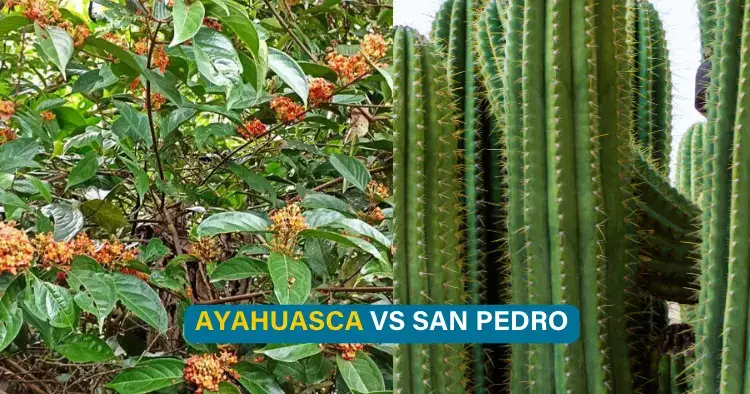
Ayahuasca vs San Pedro (Huachuma): The Complete Guide

ayahuasca vs san pedro

The mystery of the jungle — Ayahuasca. Or the wisdom of the mountains — San Pedro. Both are sacred. Both are powerful. But their teachings are very different. So which one is right for you? That’s exactly what this guide is here to help you figure out. Mother Earth has given us many gifts. Nutrients to feed the physical body. Medicines to heal its diseases. And in the same way, she has given us medicines for our emotions, our spirit, our consciousness — to liberate our thinking and help us feel more deeply. Different territories carry different medicines. In the Amazon, it is Ayahuasca. In the Andes mountains, San Pedro. In the deserts of Mexico and the United States, peyote. Across many territories of the world, psilocybin mushrooms. Each one rooted in a specific land, a specific tradition, a specific way of healing. As we dive deeper into these sacred medicines, we’ll compare their cultural backgrounds, the nature of the experiences they offer, and the potential benefits and challenges associated with each. By understanding these aspects, you’ll be better equipped to make an informed choice about which path may be calling to you at this moment in your life’s journey. Whether seeking healing, transformation, or deeper spiritual connection, both Ayahuasca and San Pedro have unique gifts to offer.  Let’s explore these ancient medicines and uncover the wisdom each holds. https://youtu.be/2c5Gsv_mERM What the Internet Gets Wrong About These Two Plants If you’ve been researching these two medicines online, you’ve likely encountered the same generalizations: Ayahuasca is the intense feminine medicine, San Pedro is the gentle masculine one. One is the grandmother, the other the grandfather. One breaks you open, the other holds you softly. There is some truth in these descriptions — but they are also incomplete, and at times misleading. This guide draws on over a decade of direct experience working with both medicines, conversations with indigenous facilitators, and research from two foundational texts: Plantas de los Dioses by Richard Evans Schultes & Albert Hofmann, and Medicina Sagrada by Cody Johnson. Our goal is not to tell you which medicine is better — because neither is. Our goal is to give you enough real understanding to make a decision that is right for you, right now. Tradition Matters: The Same Medicine Can Create a Very Different Experience We all experience reality differently — and plant medicine is no exception. Both medicines hold many different traditions. Ayahuasca can look completely different depending on where you sit with it. In many Colombian and Peruvian traditions, ceremonies are held in near-silence. In Brazil, some traditions involve dancing, singing, even celebration. San Pedro is the same — structure, dose, and facilitation style vary widely depending on the lineage and the curandero. What we’re describing are patterns, not rules. What is Ayahuasca? Ayahuasca is a sacred brew made from two plants: the Banisteriopsis caapi vine and the leaves of Psychotria viridis — also known as Chacruna. Neither plant is psychoactive on its own. But combined, they produce one of the most powerful visionary experiences known to humanity. Used for centuries — possibly millennia — by indigenous cultures across Peru, Colombia, Brazil, and Ecuador, it is a sacred technology of healing. The word Ayahuasca comes from Quechua: aya meaning spirit or ancestors, huasca meaning vine or rope. The vine of the soul. The rope to the spirit world. The Banisteriopsis caapi vine contains harmala alkaloids acting as MAO inhibitors, preventing the breakdown of DMT found in the Chacruna leaves. The result is a profound altered state lasting 5 to 8 hours, with emotional processing continuing for days afterward. What is San Pedro (Huachuma)? San Pedro — known as Huachuma in Quechua, or Achuma in Bolivia — is a tall, fast-growing columnar cactus native to the Andes. It is one of the oldest known plant medicines in the Americas, and one of the least understood. According to Plantas de los Dioses, the earliest evidence dates to approximately 1300 BC — a carved stone in a Chavín culture temple in northern Peru. Even more striking: archaeologist Rosa Fung discovered cactus preparations dating to 2200 BC — two millennia before Saint Peter walked the earth. This is not a new medicine. It is one of humanity’s oldest. Its primary active compound is mescaline — the same alkaloid found in peyote. Approximately 2% mescaline can be extracted from dried specimens, alongside hordenine and 50 to 80 additional alkaloids that shape and deepen the experience — which is why it feels distinct from synthetic mescaline or peyote despite sharing the same primary compound. Ayahuasca vs San Pedro: Key Differences at a Glance   Ayahuasca San Pedro (Huachuma) Origin Amazon rainforest Andean mountains Active compound DMT + harmala alkaloids Mescaline + 50–80 alkaloids Ceremony time Typically night Typically starts at midnight Duration 5–8 hours 8–12 hours Direction Inward, introspective Outward, connective Energy Intense, confrontational Expansive — dose-dependent Purging Very common (~95%) Less common (~20%) Physical experience Heavier on the body Generally softer on the body Music Shaman-led icaros Communal, participatory Ceremony structure More fluid, personal Often circular, around a fire The Key Differences Between Ayahuasca and San Pedro The Ceremony Experience An Ayahuasca ceremony is a deeply personal and introspective journey. Participants are seated or in hammocks, conversation is strongly limited or prohibited, and the shaman holds the space through icaros, tobacco, and other plant allies. The format is fluid — movement between inside and outside is possible — but the orientation is inward. Whatever arises is between you and the medicine. San Pedro ceremonies tend to be more communal and structured. Participants gather in a circle around a fire, with specific entrance and exit points. There is room for shared prayer, communal music, and interaction. Rather than journeying alone within a collective container, you are co-creating the space together. One is a solitary voyage held within a group. The other is a shared journey with a communal heartbeat. To deeper explore on what you can expect in an Ayahuasca ceremony