Knowing how to choose a safe ayahuasca retreat is one of the most important decisions a person can make before sitting with the medicine. The difference between a retreat that holds you safely through a challenging night and one that leaves you unsupported – or worse, in genuine danger – is not always visible in the marketing.
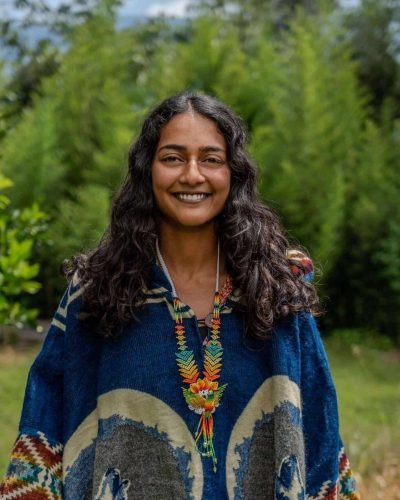
I’m Oliver Glozik, founder of Harmonica Retreat in Medellín, Colombia. Over five years and more than 1,000 ceremonies, I’ve seen how dramatically the quality of a retreat center shapes what a participant experiences and takes home. I’ve also been approached by people who had difficult or unsafe experiences elsewhere, looking for repair.
This guide is not a pitch for Harmonica. It is what I would tell anyone who asked me: here is how to evaluate a retreat honestly, what to look for, what should make you walk away, and what questions to ask before you hand over a deposit.

The 5 Non-Negotiable Safety Standards
These are not optional. Any retreat that does not meet all five of these standards has not yet earned the right to hold space for your ceremony. There are no exceptions based on price, reputation, or tradition.
1. Medical Screening Before You Book
A legitimate retreat will not accept you without understanding your medical history. This includes current and recent medications (especially SSRIs, SNRIs, and any MAO-inhibiting drugs), mental health diagnoses, cardiovascular conditions, and family history of psychosis or schizophrenia. For a full overview of conditions that require extra caution or disqualify participation, see our guide on who should not do ayahuasca. The MAOI content of ayahuasca creates real, pharmacological contraindications that can be life-threatening if ignored.
At Harmonica, every participant completes a detailed intake form before their place is confirmed. In some cases we request a conversation with a doctor. We have declined participants – not because we didn’t want their business, but because participating would not have been safe for them at that time.
2. Named, Verifiable Facilitators
You should be able to find out who will be leading your ceremony before you arrive. This means named facilitators with backgrounds you can research – their training lineage, how long they have been working with the medicine, what tradition they come from, and whether participants who worked with them can speak to their experience.
Facilitation in ayahuasca is not a credential you earn from a weekend course. It develops over years of ceremony, apprenticeship, and supervised practice. A retreat that keeps its facilitation team vague, rotates facilitators without notice, or presents a shaman with no verifiable background deserves skepticism.
3. A Clear Maximum Group Size
The ratio of facilitators to participants matters enormously during ceremony. When twelve people are having simultaneous intense experiences in a dark room, each one deserves to be seen and supported. A group of forty cannot receive that quality of attention.
Harmonica caps our ceremonies at fifteen participants, with a minimum of three experienced team members present. This is a deliberate operational decision that limits revenue but protects quality. If a retreat center doesn’t tell you their maximum group size, ask. If the answer is ‘it varies’ or ‘we accommodate everyone,’ ask more specifically.
4. Structured Integration Support
The ceremony is not the end of the experience. What happens in the days and weeks afterward – how insights are processed, where confusion is held, what support exists for difficult material that surfaces – is often where the real healing either takes root or gets lost.
Legitimate retreats include at minimum: a group integration circle the morning after ceremony, access to a facilitator for individual questions during the retreat, and post-retreat resources or follow-up. For a deeper understanding of what this process involves, see our guide on ayahuasca integration after ceremony. A retreat that packs you in, runs the ceremony, and sends you home with a smoothie and a receipt is providing entertainment, not facilitation.
5. Emergency Protocols That Are Stated, Not Just Implied
Ask directly: what happens if a participant needs emergency medical care? The answer should include: proximity to a hospital or clinic, whether any staff have first aid or wilderness first responder training, what the protocol is for a psychological emergency, and who decides when to call for outside help.
This is not a morbid question. It is a responsible one. A retreat that becomes evasive when you ask about emergency protocols is telling you something important.
FAQ: How to Choose a Safe Ayahuasca Retreat
Honest answers to the questions we hear most before booking.
Medical screening is the single most important indicator of a responsible retreat. Ayahuasca contains MAOIs that create real, potentially life-threatening interactions with common medications - particularly SSRIs and antidepressants.
A retreat that accepts you without first asking about your medications and health history is prioritising booking revenue over your safety. Every other quality indicator matters less if this foundational step is absent.
Full contraindications and what our intake process looks like: who should not do ayahuasca.
Legitimacy shows up through specificity. Look for:
- Named facilitators with verifiable backgrounds and training lineage
- Stated group sizes with clear staff ratios
- A detailed medical intake process - not just a checkbox
- Described integration protocols with specific post-retreat support
- Transparent pricing with written cancellation policies before payment
Vague answers to direct questions - "we offer a safe container," "our facilitators are experienced" without specifics - are signals that the retreat is marketing rather than demonstrating quality. Ask for past participants to speak with. A retreat confident in its work will support this.
Ayahuasca has been used in Colombia for thousands of years under the name yagé, within the traditions of the taita lineages of the Putumayo region. Legally, Colombian courts have consistently upheld the right to use traditional plant medicines within appropriate cultural and ceremonial contexts.
The practical risk to participants at established retreat centres is very low. The more relevant safety question is facilitation quality - which is as variable in Colombia as anywhere else.
For more on Colombia's legal context: ayahuasca legality guide.
Quality ayahuasca retreats typically range from $700 to $2,500 for a multi-night programme. This range can support experienced facilitation, proper medical screening, reasonable group sizes, and integration support without requiring luxury pricing.
- Under $700: Economics make proper screening and experienced staffing difficult to maintain. Approach with thorough vetting.
- $700 - $2,500: Where most solid mid-scale retreats sit. Widest spread in quality - requires the most careful evaluation.
- $2,500+: Often paying for accommodation comfort and brand recognition rather than better facilitation.
Cost is a signal, not a guarantee. Thorough vetting at any price point is essential. See our full breakdown: retreat cost guide.
First: seek support. Difficult experiences after ayahuasca - whether emotional, psychological, or physical - deserve professional attention, not solo processing.
- Contact an integration specialist or psychedelic-informed therapist
- Reach out to a trusted retreat that offers post-retreat support for participants from other centres
- If the experience involved misconduct by staff, consider reporting it to platforms like Retreat Guru or Psychedelic Alpha
At Harmonica, we have supported people who came to us after difficult experiences elsewhere, regardless of whether they plan to attend our own retreats. Book a free call - no commitment required.
Colombia, Peru, Europe – What to Know About Each
Colombia
Ayahuasca occupies a legal grey zone in Colombia that has functioned as de facto tolerance for decades. The constitutional court has repeatedly upheld the right to use traditional plant medicines within indigenous and cultural contexts. Colombia has been a home to ayahuasca traditions – particularly yagé, the Colombian name for the medicine – for thousands of years.
Medellín specifically has become a significant centre for experienced, internationally trained facilitators who combine indigenous traditions with contemporary psychological integration frameworks. The Colombian facilitator tradition draws significantly from the taita lineages of the Putumayo region, who are among the most experienced ayahuasca practitioners in the world.
Climate, accessibility, and cost make Colombia one of the most practical locations for a retreat: Medellín is a direct 4-6 hour flight from most US cities, with an internationally connected airport. The cost of living allows retreat centres to maintain quality without the premium pricing required in Europe or North America.
Peru
Peru has the deepest international ayahuasca infrastructure, with decades of retreat centres established primarily in and around Iquitos and the Sacred Valley. The Shipibo tradition from Peru is the most internationally recognized and has produced many of the world’s most experienced facilitators.
The challenge with Peru is scale: the ayahuasca tourism industry there is large enough that quality varies enormously. Some of the world’s most respected retreat centres operate in Peru. Some of the most concerning do as well. The filtering work required is significant.
Europe
Ayahuasca is illegal in most European countries as a controlled substance, though ceremonies happen through underground networks, churches with religious exemptions, and in some countries through individual decriminalization policies. The legal uncertainty creates additional risk: if a ceremony is interrupted by police, the already vulnerable participant is placed in an additional high-stress situation.
Netherlands-based retreats have historically operated under a legal interpretation that the raw plants themselves are not illegal – only DMT is. This status has been challenged in court. Europe can be appropriate for experienced participants who understand the specific legal context, but is generally not recommended for first-time ceremonies where security and stability matter most.
Price Ranges and What They Signal
Ayahuasca retreat pricing varies enormously – from under $700 for a basic multi-night ceremony to over $5,000 for a full week with intensive therapeutic support. Price is not a direct proxy for quality, but extreme pricing in either direction carries signals worth understanding.
Under $700 (per retreat)
At this level, the economics make certain things difficult to maintain: experienced facilitation staff, proper accommodation, food quality, and post-retreat support all have costs. Retreats in this range are sometimes excellent if run by small-scale practitioners with low overheads and genuine dedication. More often, they represent cost-cutting in facilitation quality, medical screening, or safety infrastructure. Approach with thorough vetting.
$700 – $2,500 (per retreat)
This is the range where most solid, mid-scale retreat operations sit. Enough margin to maintain quality facilitation, proper medical intake, reasonable group sizes, and integration support. Harmonica’s retreats sit in this range – we have made the deliberate decision not to price at the luxury end, because we believe accessibility and quality can coexist. This range is where the most careful evaluation is required, as the spread in quality is widest.
$2,500 – $5,000+ (per retreat)
At this level you are often paying for luxury accommodation, gourmet food, and brand recognition rather than necessarily superior facilitation. Some of the most expensive retreat centres in the world have excellent facilitation. Some have excellent Instagram. They are not the same thing. Price in this range does not mean the facilitation is better – it means the experience is more comfortable, which has genuine value but is different from therapeutic depth.
The 12 Questions to Ask Before Booking
These questions are not meant to be aggressive or suspicious – they are the minimum due diligence any participant owes themselves before a high-stakes experience. A retreat team that becomes defensive when asked these questions is demonstrating something important.
- Who will be facilitating my ceremony, and can I see their background and training?
- How many participants will be in the ceremony, and how many team members will be present?
- What is your medical intake process, and what conditions would prevent someone from participating?
- What integration support is included – specifically, what form, when, and with whom?
- What is your emergency protocol if a participant needs medical attention during ceremony?
- What is the legal status of ayahuasca in your country, and how does your retreat navigate this?
- Can you put me in contact with someone who has participated in a recent retreat?
- What is your policy on declining participants who may not be suitable at this time?
- What should I do if I am struggling in ceremony – how do I signal for support?
- What support exists after I leave the retreat?
- What are your refund and rescheduling policies if my circumstances change?
- What preparation do you recommend or require before I arrive?
The Right Retreat Is Worth the Research
The growth of ayahuasca retreats globally has created extraordinary options for people seeking this medicine. It has also created significant variation in quality, safety, and integrity. The work of choosing well – asking hard questions, reading carefully, speaking to past participants – is not excessive due diligence. It is proportionate to the depth of the experience you are preparing for.
The retreats that welcome this scrutiny are the ones that have nothing to hide. The ones that become evasive when pressed for specifics are telling you, clearly, what kind of container they offer.
If you have specific questions about whether ayahuasca is right for you at this point in your life, what preparation looks like, or whether Harmonica is a fit, our free 30-minute consultation is designed exactly for this. No commitment, no pressure – just an honest conversation with our team.