Can you Drink Ayahuasca During your Period?
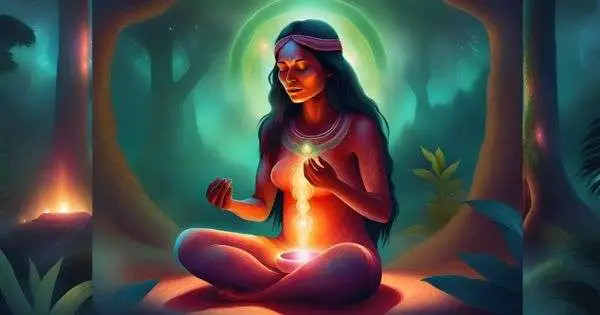
Are you curious about whether you can drink Ayahuasca on your period? This is a question many women have as they prepare for their journey with this powerful plant medicine. Ayahuasca ceremonies are deeply transformative, but periods have their own set of physical and emotional dynamics. In this article, we’ll explore the considerations and cultural perspectives, and outline our approach to drinking Ayahuasca on your period. Key takeaways Our position: At our retreat center, we allow women on their periods to drink Ayahuasca. There are some extra guidelines around this such as starting with a smaller dose. Practical Preparations: If you decide to join a ceremony during your period, prioritize comfort and warmth. Bring extra blankets, wear loose clothing, and consider herbal teas like raspberry leaf for uterine support. Open communication with facilitators ensures you receive the appropriate guidance and support. Diverse Traditions and Beliefs: Different shamans have different views on participating while on your period. Understanding these can help you make an informed decision that respects both traditional beliefs and your personal needs. Ayahuasca and menstruation Deciding to participate in an Ayahuasca ceremony can bring up many personal questions, especially when it comes to natural body processes like menstruation. It’s a sensitive issue; some spiritual leaders and shamans advise against drinking Ayahuasca while menstruating, based on long-standing traditions, while others see no problem and welcome everyone. This mixed guidance can make things confusing. You might wonder: “Should I go if I’m on my period? What could happen if I do?” These questions are important not only for your physical health but also for fitting in smoothly with the group and respecting the ceremony’s traditions. When facing this decision, it’s essential to gather as much information as possible and consider everyone involved in the ceremony. Understanding both the traditional reasons behind these guidelines and the experiences of other women can help you make a choice that feels right. Remember, the decision to participate in an Ayahuasca ceremony during menstruation should be made with care, respecting both the old ways and your personal well-being, ensuring that your experience is respectful and meaningful for everyone involved. Must read blog What to expect in your Ayahuasca ceremony Different approaches to women participating in an Ayahuasca ceremony on their period The practices surrounding a woman on her period participating in Ayahuasca ceremonies can vary significantly, not just from culture to culture, but even among individuals within the same community. This diversity in practice highlights how personal and subjective these traditions can be. For instance, in some settings, she might be asked not to participate at all, while in others, special accommodations are made, such as providing a designated area away from the main ceremony space. The reasoning behind these different approaches often stems from a belief held by some that menstruation can obscure the visions of other participants, though opinions on this can widely differ. Individual viewpoints on women drinking Ayahuasca on their period For example, Mama Concha is known for her preference that women on their periods do not join her ceremonies. On the flip side, Taita Miguel takes a more inclusive approach. During a pre-ceremony discussion, when a participant brought up Mama Concha’s advice against drinking Ayahuasca while menstruating, Taita Miguel acknowledged the validity of that perspective for Mama Concha’s ceremonies but was quick to point out that his ceremonies operate under different beliefs. Similarly, another shaman named Juan once hosted a ceremony where he asked a woman on her period to not go near the altar, aiming to respect certain traditional beliefs. Contrastingly, Sergio, another respected shaman, challenges these norms. After a ceremony that included a participant on her period, he asked others if they felt any difference in their experience, using this as a teachable moment to suggest that much of the concern might be rooted in superstition. These varied examples underline the importance of respecting each medicine giver’s practices and the cultural nuances they bring to their ceremonies. For participants, being aware of these differences and engaging in open dialogue with the ceremony leaders can ensure that everyone’s journey with Ayahuasca is respected and fulfilling, harmonizing personal needs with communal and cultural expectations. Understanding cultural beliefs about menstruation and Ayahuasca ceremonies A belief in not mixing medicines The beliefs surrounding menstruation and participation in Ayahuasca ceremonies are deeply rooted in the cultural and spiritual frameworks of indigenous communities. Many cultures regard each phase of a woman’s menstrual cycle as spiritually significant, viewing it as a time for women to reflect on the past month’s stresses and challenges, which can potentially lead to heightened emotional states. Some traditions consider this introspective process as a natural medicinal period, suggesting that the profound personal insights and emotional cleansing it provides may eliminate the need for other spiritual medicines like Ayahuasca during this time. A belief reflecting patriarchal views Some suggest that these traditions may also reflect outdated gender norms, influenced by patriarchal values. Historically, women’s roles and rights were restricted in many societies, including indigenous ones, which could have shaped various cultural practices. For example, the restriction against women participating in ceremonies during menstruation might have been initially promoted by men who labeled women as emotionally unstable during their periods. This could have been a tactic to encourage women to focus on self-care, to prevent them from “contaminating” the communal experience, thus perpetuating a narrative that served to maintain control under the pretence of cultural tradition. This conversation highlights the importance of continuously evaluating our practices to ensure they remain respectful and inclusive, balancing traditional wisdom with a modern understanding of gender equality. How menstruation affects your Ayahuasca ceremony For women considering participating in an Ayahuasca ceremony during their menstrual period, it’s important to set realistic expectations and prepare for the experience, which can differ significantly from their usual menstrual cycle. First, it’s not uncommon for some women to experience an increased level of bleeding when they drink Ayahuasca during menstruation. This can be attributed to
What can you eat on Ayahuasca Diet?
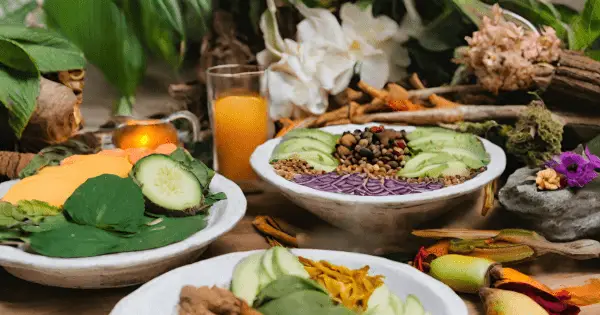
Understand the plant-based diet for spiritual receptivity and ancient wisdom. Embark on a transformative Ayahuasca journey, connecting mind, body, and spirit.
Ayahuasca didn’t work? No effects? What it means!

It can be disheartening to sit in an Ayahuasca ceremony, drink the medicine, and feel… nothing. While others around you may be deep in their process—purging, crying, receiving visions—you’re left wondering what went wrong. If this has happened to you, know that you’re not alone, and more importantly, it doesn’t mean Ayahuasca didn’t work. These type of experiences in a way can be the most challenging one’s, confronting us with our judgement, lack of patience, trust and making us questions if something is wrong with us… beginning of a deeper journey, one that’s asking for patience, preparation, and trust. So what does it mean, how can you avoid it the next time and how can you still benefit from it? Key takeaways Approaching Ayahuasca with high expectations may hinder the experience. Letting go of rigid expectations allows for a more profound connection. Acknowledging individual differences in metabolism and ensuring proper dietary preparation are essential steps to enhance the Ayahuasca experience. Not feeling Ayahuasca right away is a normal part of the process—it doesn’t always go from zero to profound overnight. Often, the medicine begins by helping you face and feel the very blockages that have kept you disconnected, and that alone is meaningful progress. Table of Contents From my personal experience This happened to me in my very first ceremony. After three cups, I still wasn’t feeling anything—aside from the growing frustration that nothing seemed to be happening. Eventually, I decided to go for a fourth cup, and that’s when something opened. Suddenly, I was flooded with a deep sense of connection and unconditional love flowing through me. Looking back, it wasn’t that the first three cups weren’t working. The medicine was gently peeling back the layers—layers I had built up over time, subconsciously afraid to truly feel. Each cup was slowly softening the walls I didn’t even know I had. The indigenous always speak about patience, and it’s one of the hardest things to truly embody in this work. But there’s always a reason, and I encourage you to trust your process—especially when it seems like nothing is happening. Your expectations and the Ayahuasca Effects Expectations can quietly get in the way of your connection with Ayahuasca. It’s normal to hope for a certain kind of experience, but when you hold on too tightly to how it should look or feel, you may actually block the very thing you’re seeking. Ayahuasca is more like a relationship you build than a substance you control. If you only value someone when they behave exactly how you want, the relationship suffers. The same is true with this medicine—it asks for trust, not control. The real opening often happens when you let go. When you drop the need to force an outcome and allow the experience to unfold in its own time, Ayahuasca has a way of meeting you where you are—and often in ways you didn’t expect. Why some people don’t feel the effects Psychological Resistance: Your mindset plays a significant role in how Ayahuasca affects you. If you’re holding onto fear, skepticism, or a need for control, these mental barriers can inhibit the medicine’s ability to connect with you. Being overly analytical or resistant to emotional vulnerability can also create obstacles. Psychological resistance can also show up as: Subsonsiscous resistance to meet yourself. Having a deep level of trauma. It’s part of the process It’s part of the process When someone doesn’t feel the effects of Ayahuasca, it’s easy to slip into doubt—questioning the experience, feeling let down, or assuming it simply didn’t work. Many begin to lose faith, thinking they’ve wasted their time or money. But after guiding hundreds of people each year, we see this more often than most would expect. And in the vast majority of cases, it’s not a failure—it’s just part of their unique process. It’s the beginning of opening. Of slowly peeling back the layers that have been built over time. Sometimes Ayahuasca brings us face to face with parts of ourselves we’d rather not see—the skeptic, the inner critic, the constant overthinker. And just by observing these mental patterns, we begin the process of releasing them. Energetic clearing doesn’t always come with visions—it often begins with simply seeing ourselves more clearly. Pay Attention to the Days After It can be that people have a non – experience in the ceremony. But the next day(s) they feel a level of peace they haven’t felt in a long time. In these caes, people often say, the Ayahuasca didn’t work, what they fail to make is the connection. Ayahuasca is not just an experience. Not just the effects that you feel in the ceremony, but even more the messages, that are coming in the coming days. The things that trigger you, the things that move you, the feelings you are going through. Individual Differences in Metabolism Each person’s body processes substances differently. Factors like genetics, liver enzyme activity, and gut health can influence how Ayahuasca is metabolized, potentially leading to a muted experience. Not doing the diet correctly, especially consuming cannabis Traditional Ayahuasca practices emphasize on preparation—both physically and mentally. Following dietary guidelines and avoiding substances like alcohol, certain medications, and especially cannabis is essential. Cannabis, in particular, can dull emotional sensitivity and create a layer of numbness that makes it harder for the medicine to fully reach you. A clean body and a clear mind help you become more receptive to the subtle and deep work Ayahuasca is here to do. Drinking Ayahuasca for recreational purposes Ayahuasca works on a deep, intelligent level—it meets you exactly where you are. If you’re approaching the ceremony from a place of “having an experience” without a profound intention, or you’re subconsciously not ready to face what’s within, the medicine often won’t take you very far. It’s not about being punished or denied an experience—it’s that Ayahuasca seems to wait until you’re truly ready to go deeper. This isn’t a recreational substance; it’s a profound process that unfolds
